
Warren Buffett Investment Strategy: 7 Proven Lessons for Building Long-Term Wealth
Author: Kumar G, Founder of FutureSmartLiving.com
Disclaimer: Kumar G is an independent researcher and writer covering personal finance, investing, technology, and smart living. He is not a licensed financial advisor, CPA, attorney, or investment professional. This article is for educational and informational purposes only and should not be considered financial, investment, tax, or legal advice. Always consult a qualified financial professional before making investment decisions.
Introduction
When people think about successful investing, one name stands above the rest: Warren Buffett.
Often called the “Oracle of Omaha,” Buffett transformed Berkshire Hathaway from a struggling textile company into one of the most valuable corporations in the world. His investment philosophy has created extraordinary wealth for shareholders while remaining surprisingly simple and practical.
Unlike traders who chase short-term market movements, Buffett focuses on buying great businesses, holding them for years, and allowing compounding to work in his favor. His principles have remained consistent for decades and continue to guide investors around the world.
Whether you’re a beginner learning about investing or someone looking to improve your long-term strategy, understanding Warren Buffett’s investment approach can provide valuable lessons for building wealth.
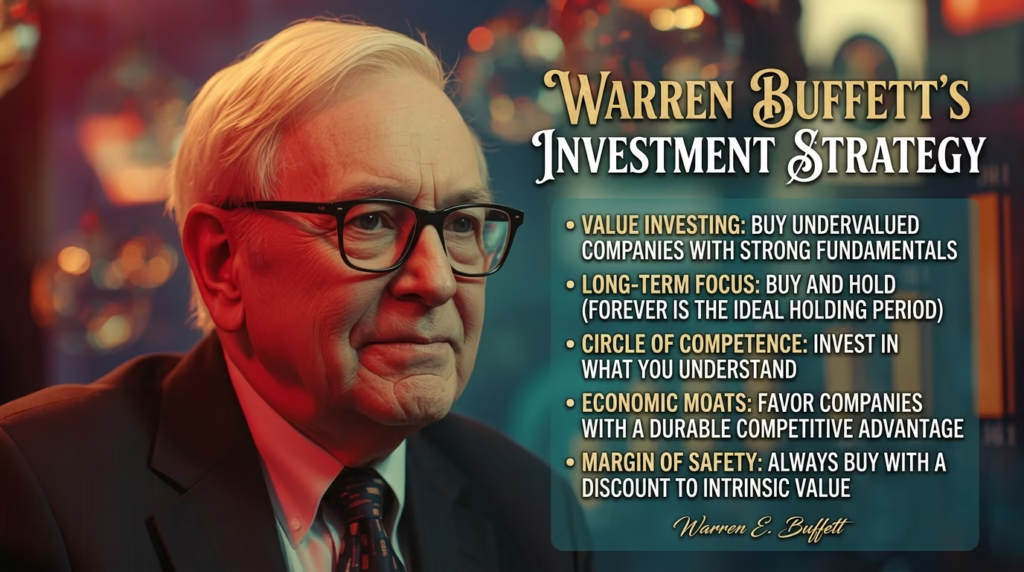
Table of Contents
- Who Is Warren Buffett?
- Buy Businesses, Not Stocks
- The Importance of Economic Moats
- Understanding Intrinsic Value
- The 20-Punch Card Rule
- Stay Within Your Circle of Competence
- Buffett’s Biggest Investments
- Common Wealth-Building Mistakes
- Invest in Yourself First
- Frequently Asked Questions
- Final Thoughts
Who Is Warren Buffett?
Warren Buffett is the chairman and CEO of Berkshire Hathaway, a multinational holding company that owns and invests in dozens of businesses.
His investing journey began when he purchased his first stock at age 11. Later, he studied under renowned investor Benjamin Graham, whose value-investing principles shaped Buffett’s early career.
Investors can learn directly from Buffett’s insights by reading the annual shareholder letters published by Berkshire Hathaway. These letters are widely regarded as some of the most valuable educational resources in investing.
1. Buy Businesses, Not Stocks
One of Buffett’s most important lessons is that investors should think like business owners rather than stock traders.
When many people buy a stock, they focus on price movements. Buffett takes a different approach. He views each share as partial ownership of a real business.
Before investing, ask yourself:
- Would I be comfortable owning this business for 10–20 years?
- Does the company generate consistent profits?
- Does management allocate capital wisely?
- Does the company have a competitive advantage?
This mindset helps investors ignore short-term market noise and focus on long-term value creation.
2. The Importance of Economic Moats
Buffett frequently looks for companies with an “economic moat.”
An economic moat is a sustainable competitive advantage that protects a company from competitors.
Examples include:
Strong Brands
Companies such as The Coca-Cola Company benefit from global brand recognition that competitors struggle to replicate.
Network Effects
Payment networks and technology platforms often become more valuable as more people use them.
Cost Advantages
Some businesses can produce goods or services more efficiently than competitors.
High Switching Costs
Customers may find it difficult or expensive to switch to alternative providers.
The wider the moat, the more likely a company can maintain profits over long periods.
3. Understanding Intrinsic Value
A core concept behind Warren Buffett’s investment strategy is intrinsic value.
Intrinsic value represents what a business is truly worth based on its future cash-generating ability rather than its current stock price.
Buffett often emphasizes that investors should compare market price to intrinsic value before making investment decisions.
If the market price is significantly below intrinsic value, the stock may offer a margin of safety.
This concept originates from the value-investing principles developed by Benjamin Graham. Investors can learn more through Investopedia’s Benjamin Graham Guide.
4. The 20-Punch Card Rule
Buffett once suggested that investors should imagine they have a punch card containing only 20 investment decisions for their entire lifetime.
This thought experiment encourages discipline.
If you only had 20 investment opportunities, you would:
- Research more carefully
- Avoid speculation
- Focus on high-quality businesses
- Hold investments longer
Many investors underperform because they constantly buy and sell. Buffett’s approach rewards patience and thoughtful decision-making.
5. Stay Within Your Circle of Competence
One of Buffett’s most practical lessons is to stay within your circle of competence.
This means investing only in businesses you genuinely understand.
For example:
- A software engineer may understand technology companies.
- A healthcare professional may understand medical businesses.
- A retail executive may understand consumer brands.
You do not need to understand every industry. You only need to recognize the limits of your knowledge and invest accordingly.
6. Buffett’s Biggest Investments
Studying Buffett’s largest investments reveals how he applies his philosophy in practice.
Apple
Apple Inc. became one of Berkshire Hathaway’s largest holdings because of its powerful brand, loyal customer base, and strong cash generation.
Coca-Cola
The Coca-Cola Company demonstrates Buffett’s preference for businesses with global reach and enduring consumer demand.
American Express
American Express benefits from a trusted brand and a strong position in the payments industry.
Bank of America
Bank of America represents Buffett’s long-term confidence in the American banking system.
These investments share common characteristics:
- Strong brands
- Consistent earnings
- Competitive advantages
- Capable management
- Long-term growth potential
7. Common Wealth-Building Mistakes
Building wealth is not only about making good decisions. It is also about avoiding costly mistakes.
Chasing Market Trends
Many investors buy assets after prices have already risen significantly.
Frequent Trading
Excessive trading often increases costs and reduces long-term returns.
Taking on High-Interest Debt
Credit card debt can severely limit wealth-building potential.
Ignoring Diversification
Concentrating all investments in one stock or sector increases risk.
Investing Without Research
Successful investing requires understanding the business behind the stock.
Invest in Yourself First
Buffett frequently states that the best investment you can make is in yourself.
Skills such as communication, leadership, critical thinking, and financial literacy can produce returns throughout your lifetime.
Unlike stocks or real estate, personal skills cannot be taken away during market downturns.
Consider investing in:
- Professional certifications
- Industry knowledge
- Communication skills
- Financial education
- Career development
These investments can increase earning power and create opportunities for decades.
Frequently Asked Questions
What is Warren Buffett’s investment strategy?
Warren Buffett follows a value-investing strategy focused on buying high-quality businesses at reasonable prices and holding them for the long term.
What is an economic moat?
An economic moat is a sustainable competitive advantage that helps a company protect profits from competitors.
Does Warren Buffett recommend index funds?
Yes. Buffett has repeatedly suggested that many individual investors may be better served by low-cost index funds rather than attempting to pick individual stocks.
What is intrinsic value?
Intrinsic value is an estimate of a company’s true worth based on future cash flows and business fundamentals.
Can beginners follow Warren Buffett’s strategy?
Yes. Buffett’s principles focus on patience, business quality, long-term thinking, and disciplined investing, making them accessible to beginners.
Final Thoughts
Warren Buffett’s investment strategy has remained remarkably consistent for decades. Rather than chasing trends or trying to predict markets, he focuses on understanding businesses, buying quality assets, and holding them long enough for compounding to work.
For most investors, the biggest takeaway is simple: invest in what you understand, think long term, and remain disciplined during market fluctuations.
While no strategy guarantees success, Buffett’s principles provide a proven framework for making smarter investment decisions and building wealth over time.
About the Author
Kumar G is the founder of FutureSmartLiving.com and an independent researcher covering personal finance, investing, technology, AI tools, and smart living. He is not a licensed financial advisor, CPA, attorney, or investment professional. All content published on FutureSmartLiving.com is intended for educational and informational purposes only.