
China Travel 2026: Top Futuristic Cities, Natural Wonders, Tibet & Cultural Experiences
China is one of the world’s most diverse travel destinations, combining ancient history, extraordinary landscapes, enormous modern cities, high-speed rail, regional cuisines, and centuries-old cultural traditions.
For travelers planning China travel in 2026, the country offers an unusual combination: you can spend one day exploring an ancient temple or historic neighborhood and the next experiencing one of the world’s most advanced transportation networks.
From the technology-focused streets of Shenzhen to the dramatic mountains of Zhangjiajie, the layered urban landscape of Chongqing, the rivers of Guilin, and the high-altitude culture of Tibet, China offers experiences for technology enthusiasts, photographers, food lovers, history travelers, and outdoor adventurers.
This guide explores the best places to visit in China in 2026, how to move between major destinations, and the experiences worth adding to your itinerary.
Travel note: Entry requirements, transportation schedules, attraction rules, and regional permits can change. Always check official government and destination websites before booking.
Table of Contents
- Why Visit China in 2026?
- China’s High-Speed Rail Experience
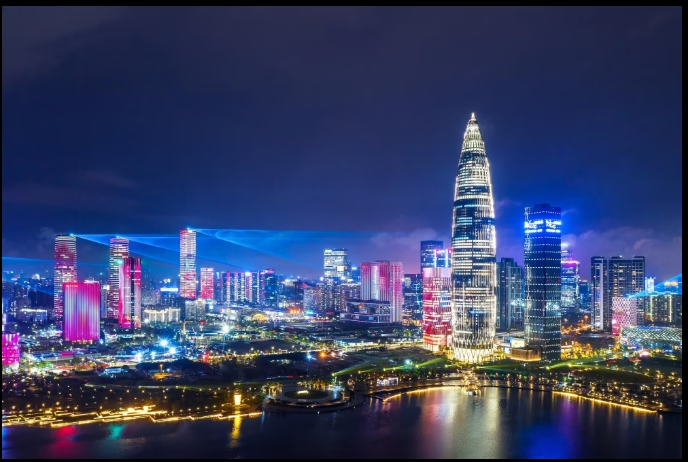
- Shenzhen: China’s Futuristic Technology City
- Chongqing: China’s Vertical Megacity
- Zhangjiajie: The Avatar-Like Mountains
- Tianmen Mountain and the Gateway to Heaven
- Guilin and the Li River
- Tibet and Lhasa
- Mount Everest and High-Altitude Travel
- Kashgar and China’s Silk Road Heritage
- Chinese Food You Should Try
- Best China Travel Experiences for Different Travelers
- China Travel Tips for 2026
- Sample China Travel Itinerary
- Frequently Asked Questions
Why Visit China in 2026?
China is particularly interesting for travelers because different parts of the country offer dramatically different experiences.
You can experience:
- Modern megacities
- High-speed rail journeys
- Ancient temples
- UNESCO World Heritage Sites
- Mountain landscapes
- Traditional villages
- Regional Chinese cuisine
- Tibetan culture
- Silk Road history
- Contemporary technology
China currently has 61 properties inscribed on the UNESCO World Heritage List, including the Great Wall, the Historic Ensemble of the Potala Palace, Wulingyuan, and the Silk Roads corridor. (UNESCO World Heritage Centre)
That makes China especially attractive for travelers who want more than a conventional city vacation.
China’s High-Speed Rail: One of the Best Ways to Travel
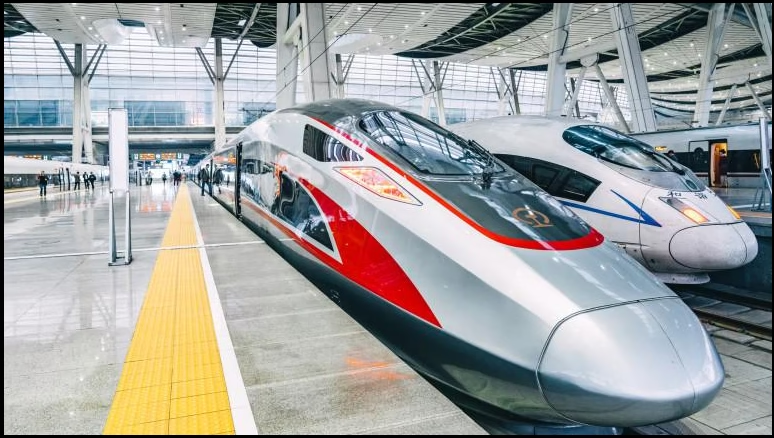
One of the easiest ways to understand modern China is to travel by high-speed train.
By the end of 2025, China’s operating railway network had reached about 165,000 km, including more than 50,000 km of high-speed rail. Railway construction and expansion continued during the first half of 2026. (State Council of China)
Some high-speed railway routes are designed for speeds of 350 km/h, although actual journey speeds vary by route and service. (State Council of China)
Why travelers should consider high-speed trains
High-speed rail can be useful because it:
- Connects major cities efficiently
- Reduces the need for domestic flights on many routes
- Offers comfortable seating
- Provides scenic views
- Connects major urban centers with regional destinations
For example, recent railway development has improved connections around destinations such as Chongqing, Changsha, Xi’an, and Changbai Mountain. (State Council of China)
Long-tail keyword opportunity
How to travel around China by high-speed train
For a first trip, consider building an itinerary around major rail-connected cities rather than trying to cover the entire country.
Shenzhen: China’s Futuristic Technology City
If you’re interested in technology, Shenzhen should be high on your China travel list.
The city has become closely associated with electronics, manufacturing, startups, advanced transportation, and technology companies.
For technology-focused travelers, Shenzhen provides a very different experience from historic destinations such as Beijing or Xi’an.
Things to experience in Shenzhen
Consider exploring:
- Futian district
- Shenzhen Bay
- Huaqiangbei electronics area
- Contemporary architecture
- Shopping districts
- Technology and innovation spaces
- Modern restaurants and cafés
Instead of describing Shenzhen as “100 years ahead,” it is more accurate to describe it as one of China’s major technology and innovation centers.
That wording is also more credible for a travel publication.
Chongqing: China’s Vertical Megacity
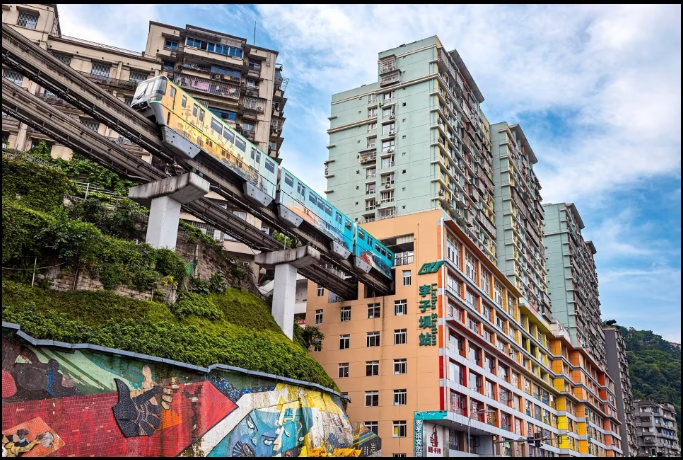
Chongqing is one of the most visually unusual cities in China.
Its mountainous geography has produced a dense urban environment with elevated roads, bridges, tunnels, railways, and buildings spread across different levels.
One of the city’s most photographed attractions is the Liziba monorail station, where a train appears to pass through a residential building.
Things to do in Chongqing
Add these experiences to your itinerary:
- Ride the Chongqing Rail Transit system
- Visit Liziba
- Explore Hongya Cave
- Walk through Jiefangbei
- Try Chongqing hot pot
- Photograph the city at night
- Explore the city’s mountainous streets
Chongqing is particularly appealing to photographers because the combination of architecture, mountains, rivers, and nighttime lighting creates a distinctive cityscape.
Zhangjiajie: China’s Dramatic Mountain Wonderland
For nature lovers, Zhangjiajie is one of the strongest destinations in this entire guide.
The Wulingyuan Scenic and Historic Interest Area is a UNESCO World Heritage property famous for its spectacular sandstone formations and forested mountains. (UNESCO World Heritage Centre)
The landscape is sometimes associated with the floating mountains seen in the movie Avatar, although the real landscape is impressive enough without the Hollywood comparison.
What to see in Zhangjiajie
Popular experiences include:
- Zhangjiajie National Forest Park
- Wulingyuan Scenic Area
- Tianzi Mountain
- Yuanjiajie
- Bailong Elevator
- Mountain viewpoints
- Glass walkways and bridges in the wider Zhangjiajie region
Best long-tail keyword
Zhangjiajie travel guide for first-time visitors
This is an excellent standalone article topic for your website because it has strong informational search intent.
Tianmen Mountain: The Gateway to Heaven
Tianmen Mountain is another major attraction near Zhangjiajie.
The mountain is famous for its dramatic natural arch, steep cliffs, panoramic viewpoints, and cable-car experience.
The combination of:
- Mountain scenery
- Cable cars
- Cliffside paths
- Skywalks
- Natural formations
makes Tianmen Mountain particularly attractive to adventure travelers and photographers.
Travel tip
Don’t confuse Zhangjiajie National Forest Park with Tianmen Mountain National Park. They are separate attractions and should be planned as separate experiences.
Guilin and the Li River: China’s Classic Landscape
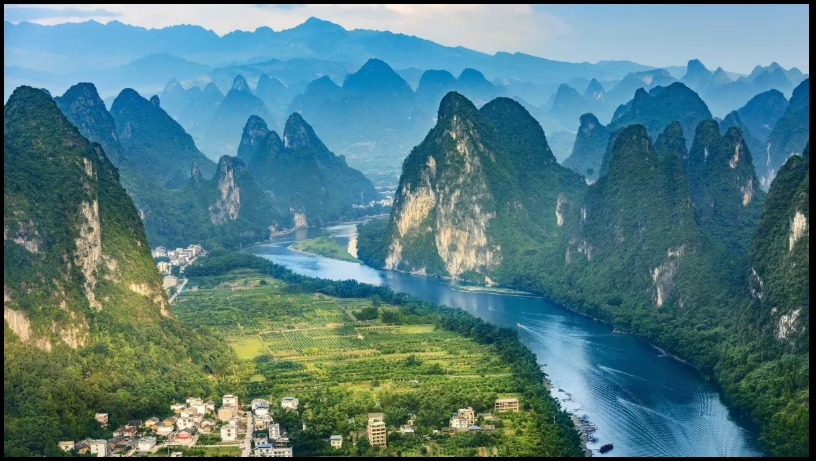
If mountains and peaceful scenery appeal to you more than megacities, consider Guilin and the Li River.
The region is famous for:
- Karst mountains
- River cruises
- Rice fields
- Traditional villages
- Cycling
- Photography
A popular route connects Guilin and Yangshuo, allowing travelers to experience the dramatic karst landscape from the water.
The Lijiang River Scenic Zone around Guilin is also listed on China’s UNESCO tentative list. (UNESCO World Heritage Centre)
Best experience
Take a Li River cruise and spend additional time exploring Yangshuo rather than treating the region as only a quick day trip.
Tibet and Lhasa: High-Altitude Culture and History
Tibet offers an entirely different experience from China’s major eastern cities.
Lhasa is home to the Potala Palace, one of the world’s most recognizable high-altitude cultural landmarks.
The Historic Ensemble of the Potala Palace, Lhasa, is a UNESCO World Heritage property. (UNESCO World Heritage Centre)
Things to experience in Lhasa
Travelers can explore:
- Potala Palace
- Jokhang Temple
- Barkhor Street
- Tibetan Buddhist cultural sites
- Traditional markets
- Himalayan landscapes
Important Tibet travel consideration
Travel to Tibet involves additional planning for international visitors, including regional travel requirements and permits that can differ from ordinary mainland China travel arrangements.
Do not assume that a normal China visa alone is sufficient for every Tibet itinerary.
Always confirm current requirements with an authorized tour operator and official authorities before making reservations.
Mount Everest and High-Altitude Travel
The northern side of Mount Everest is accessible from Tibet.
The region offers spectacular Himalayan scenery, but Everest travel is very different from visiting a normal tourist attraction.
Altitude is the biggest consideration.
At high elevations, travelers can experience:
- Headaches
- Fatigue
- Shortness of breath
- Sleep problems
- Acute mountain sickness
Anyone planning a high-altitude trip should discuss the itinerary with a qualified medical professional, particularly if they have underlying health conditions.
Do not treat oxygen equipment as a substitute for acclimatization or medical care.
Kashgar: Exploring the Silk Road Legacy
Kashgar offers a different side of China.
Located in Xinjiang, the city has historically been connected to the Silk Road and remains known for its distinctive architecture, markets, food, and cultural heritage.
Travelers interested in history can explore:
- Kashgar Old City
- Id Kah Mosque area
- Traditional markets
- Local food
- Silk Road history
- Regional crafts
China’s UNESCO listings include the Silk Roads: the Routes Network of the Chang’an-Tianshan Corridor, highlighting the historical importance of this broader network. (UNESCO World Heritage Centre)
Because travel conditions and access rules in Xinjiang can change, check current official guidance before planning a trip.
Chinese Food: One Country, Many Culinary Traditions
One of the biggest mistakes first-time visitors make is thinking of Chinese cuisine as a single style of food.
China has enormous regional culinary diversity.
Chongqing
Try:
Chongqing hot pot
Expect a spicy, aromatic broth with ingredients cooked at the table.
Sichuan
Look for:
- Mapo tofu
- Dan dan noodles
- Sichuan hot pot
- Kung pao dishes
Guangdong
Try:
- Dim sum
- Roast meats
- Cantonese soups
- Seafood
Xinjiang
Try:
- Lamb kebabs
- Hand-pulled noodles
- Pilaf
- Flatbreads
Food can be one of the best ways to understand China’s regional diversity.
Best China Travel Experiences for Different Travelers
| Traveler Type | Recommended Destinations |
|---|---|
| Technology lovers | Shenzhen, Shanghai, Beijing |
| Nature lovers | Zhangjiajie, Guilin, Jiuzhaigou |
| History lovers | Beijing, Xi’an, Luoyang |
| Food lovers | Chengdu, Chongqing, Guangzhou |
| Photography lovers | Zhangjiajie, Guilin, Chongqing |
| Cultural travelers | Lhasa, Beijing, Xi’an |
| Adventure travelers | Tibet, Zhangjiajie, Yunnan |
| First-time visitors | Beijing, Shanghai, Xi’an |
China Travel Tips for 2026
1. Plan transportation before arriving
China is enormous, so don’t underestimate travel time.
Use high-speed rail where practical and domestic flights for some longer distances.
2. Download essential apps
Depending on your itinerary, research:
- Translation apps
- Maps
- Train booking services
- Mobile payment options
- Hotel apps
Check whether each service works for international visitors before relying on it.
3. Carry a backup payment method
Don’t depend on only one payment method.
Keep a backup card and some local currency available.
4. Check internet access before departure
Some international websites and services may be inaccessible or work differently in mainland China.
Prepare the services you need before leaving home.
5. Check visa requirements
Visa and transit policies depend on nationality, itinerary, and purpose of travel.
China’s National Immigration Administration currently publishes visa-free transit rules, including a 240-hour transit policy for eligible nationals of 55 countries under specified conditions. (National Immigration Administration)
This does not mean every traveler can enter China visa-free. Check your exact nationality and itinerary against current official requirements.
A Sample 12-Day China Travel Itinerary
If this is your first trip, trying to see everything is a mistake.
A more realistic itinerary could be:
Days 1–3: Beijing
Explore:
- Great Wall
- Forbidden City
- Temple of Heaven
- Hutongs
Days 4–5: Xi’an
Visit:
- Terracotta Army
- Ancient City Wall
- Muslim Quarter
Days 6–7: Chengdu
Experience:
- Giant pandas
- Sichuan cuisine
- Traditional tea culture
Days 8–10: Zhangjiajie
Explore:
- Wulingyuan
- Zhangjiajie National Forest Park
- Tianmen Mountain
Days 11–12: Shanghai
Finish your journey with:
- The Bund
- Pudong skyline
- Historic neighborhoods
- Modern shopping and dining
For a first visit, this provides a better balance of history + food + nature + modern China than attempting to add Tibet and Xinjiang to the same trip.
Is China Worth Visiting in 2026?
For travelers interested in technology, history, food, architecture, and nature, China offers an unusually broad range of experiences.
Its high-speed rail system makes multi-city travel increasingly practical, while destinations such as Zhangjiajie and Guilin provide landscapes that are completely different from the country’s megacities. Tibet offers high-altitude cultural experiences, while cities such as Shenzhen and Chongqing showcase another side of contemporary China.
The biggest lesson is simple: don’t try to see all of China in one trip.
Choose a region or theme and explore it properly.
Whether your dream is riding a high-speed train, photographing Zhangjiajie’s mountains, eating Chongqing hot pot, walking through a historic Silk Road city, or exploring the streets of Shenzhen, China in 2026 offers plenty of reasons to go beyond the usual tourist checklist.
Frequently Asked Questions
What are the best places to visit in China in 2026?
Popular choices include Beijing, Shanghai, Xi’an, Chengdu, Shenzhen, Chongqing, Zhangjiajie, Guilin, and Lhasa. The best destination depends on whether you prioritize history, technology, food, nature, or culture.
Is China good for first-time travelers?
Yes, but the country is extremely large. First-time visitors should concentrate on a few destinations rather than attempting to travel across the entire country.
What is the best way to travel around China?
High-speed rail is one of the most convenient options between many major cities. China’s high-speed network exceeded 50,000 km by the end of 2025. (State Council of China)
Is Zhangjiajie worth visiting?
Yes. Zhangjiajie’s Wulingyuan landscape is a UNESCO World Heritage property and is particularly attractive to hikers, photographers, and nature lovers. (UNESCO World Heritage Centre)
Can foreigners travel to Tibet?
International travelers can visit Tibet, but additional requirements and permits apply. Requirements can change, so check current official information and work with an authorized travel provider before booking.
Is China expensive to visit?
China offers a wide range of accommodation, food, transportation, and activity prices. A trip can be designed around either budget or premium travel, although major cities and popular attractions can be more expensive.
Recommended External Resources
For credibility and SEO, I recommend linking primarily to official or authoritative sources rather than random travel blogs:
- UNESCO — China World Heritage Convention — useful for verifying China’s major cultural and natural heritage sites.
- China National Immigration Administration — Visa-Free Transit Policies — useful for current transit and entry information.
- China’s State Council — Railway Network Information — useful for current high-speed rail statistics.
- China’s State Council — 2026 Railway Development — useful for current 2026 infrastructure updates.
- UNESCO — World Heritage in China — additional destination and heritage information.
Suggested Internal Links
- The Rise and Fall of the Roman Empire: Complete History of Rome
- Warren Buffett Investment Strategy
- AI in Healthcare: The Future of Medicine, Longevity & Medical Breakthroughs
- Investing for Growth with $100