
The Rise and Fall of the Roman Empire: A Complete History of Rome
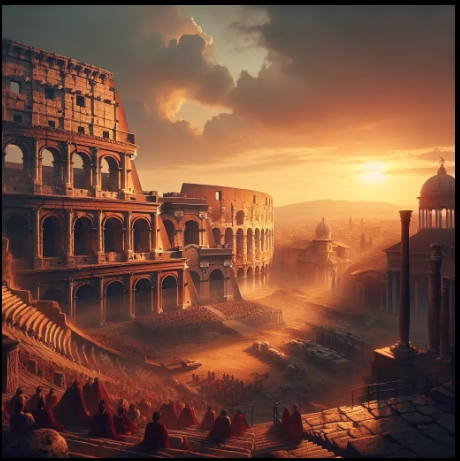
Few civilizations have shaped the modern world as profoundly as the Roman Empire. From humble beginnings as a small settlement on the banks of the Tiber River to becoming the greatest empire of the ancient world, Rome influenced politics, law, engineering, architecture, language, and military strategy for over a thousand years.
At its peak, the Roman Empire ruled more than 70 million people, stretched across three continents, and controlled nearly the entire Mediterranean Sea. Its roads connected distant provinces, its legal principles inspired modern constitutions, and its engineering marvels still stand today.
But how did a tiny city-state become the world’s greatest superpower? And why did such a powerful civilization ultimately collapse?
This complete guide explores the fascinating story of Rome—from its legendary origins to its dramatic fall—and explains why its influence continues to shape our world today.
Table of Contents
- The Legendary Founding of Rome
- Rome Under the Kings
- Birth of the Roman Republic
- The Punic Wars
- Julius Caesar and the End of the Republic
- Augustus and the Roman Empire
- The Pax Romana
- The Five Good Emperors
- Roman Society and Daily Life
- Engineering and Architecture
- Religion and Christianity
- Crisis of the Third Century
- Why Did the Roman Empire Fall?
- Legacy of Ancient Rome
- Roman Empire Timeline
- Frequently Asked Questions
The Legendary Founding of Rome
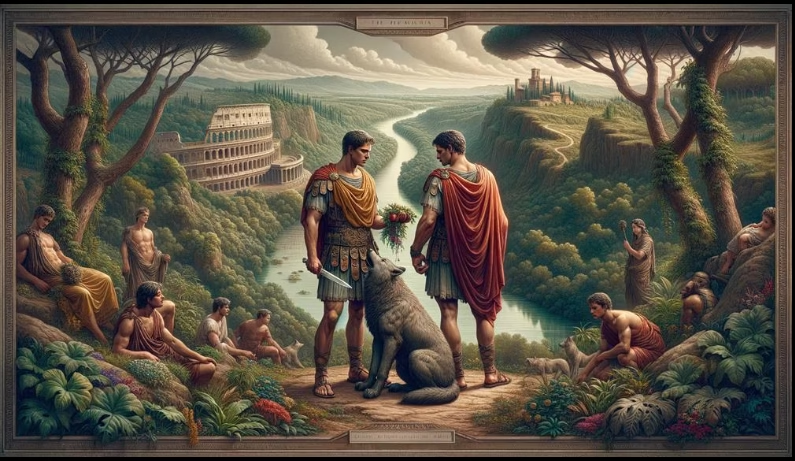
According to Roman legend, the city was founded on April 21, 753 BC, by Romulus, after he killed his twin brother Remus during a dispute over where the new city should be built.
The twins were said to be descendants of the Trojan hero Aeneas and were famously raised by a she-wolf.
Although archaeology suggests Rome gradually developed from several Latin settlements rather than being founded in a single day, the legend became one of history’s most enduring origin stories.
Rome Under the Seven Kings
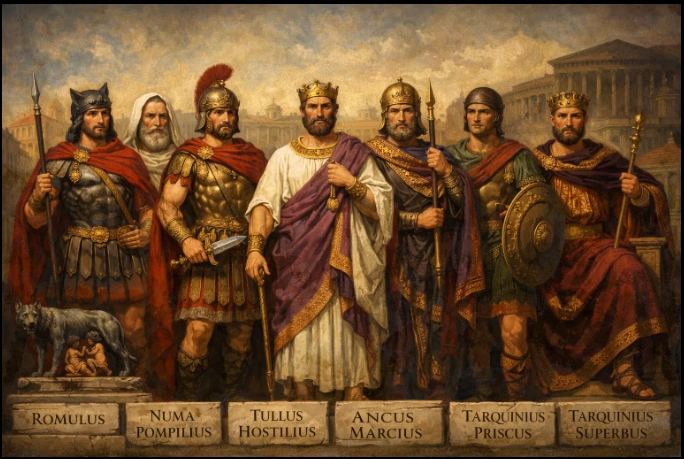
Before becoming a republic, Rome was ruled by seven kings.
During this period, the Romans developed:
- Religious traditions
- Military organization
- Public infrastructure
- Early legal customs
The last king, Lucius Tarquinius Superbus, became notorious for tyranny. His overthrow in 509 BC led directly to the creation of the Roman Republic.
Birth of the Roman Republic
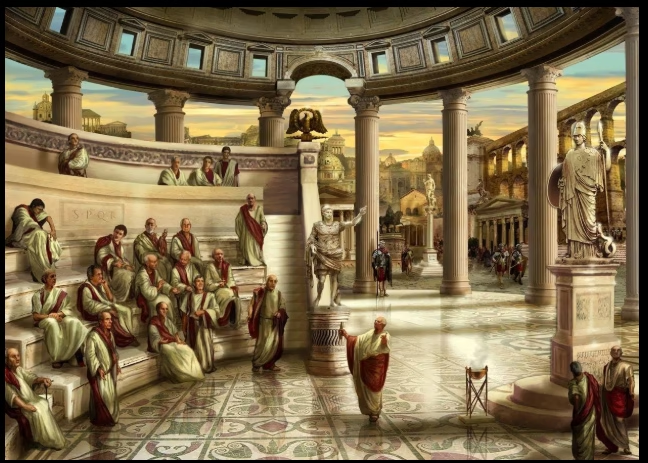
The Roman Republic introduced one of history’s earliest systems of representative government.
Power was divided among:
- Two Consuls
- The Senate
- Popular assemblies
- Magistrates
This balance prevented any one individual from becoming too powerful—at least initially.
Roman citizens valued:
- Duty
- Discipline
- Civic responsibility
- Military service
These ideals helped Rome expand throughout the Italian Peninsula.
The Punic Wars: Rome Becomes a Superpower
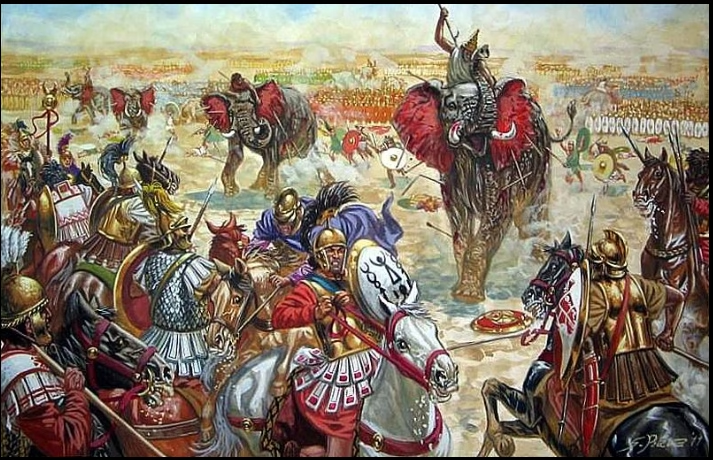
Rome’s greatest rival was Carthage, a wealthy maritime empire in North Africa.
The three Punic Wars (264–146 BC) transformed Roman history.
First Punic War
Rome built its first large navy and gained control of Sicily.
Second Punic War
The Carthaginian general Hannibal crossed the Alps with war elephants and won several remarkable victories.
However, Roman commander Scipio Africanus defeated Hannibal at the Battle of Zama in 202 BC.
Third Punic War
Rome completely destroyed Carthage in 146 BC.
With Greece also under Roman control, Rome became the dominant power of the Mediterranean.
Julius Caesar and the End of the Roman Republic
As Rome expanded, political corruption increased.
Military leaders gained enormous personal influence.
No figure changed Roman history more than Julius Caesar.
His conquest of Gaul made him one of history’s greatest military commanders.
When political rivals ordered him to surrender command, Caesar crossed the Rubicon River, beginning civil war.
After victory, he became Dictator for Life.
His reforms included:
- Calendar reform
- Debt reduction
- Land redistribution
- Senate expansion
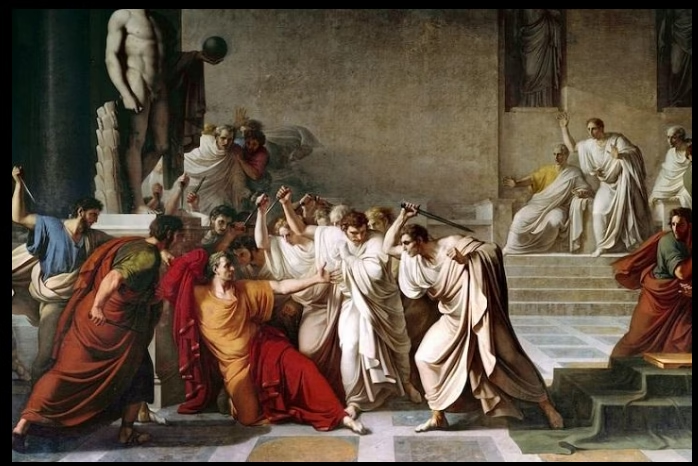
On March 15, 44 BC (the Ides of March), Caesar was assassinated by senators who feared he would become king.
Ironically, his death accelerated the collapse of the Republic.
Augustus: Rome’s First Emperor
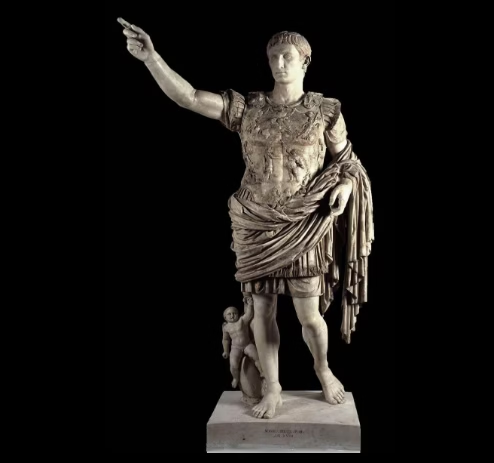
Following years of civil war, Caesar’s adopted heir Octavian defeated Mark Antony and Cleopatra.
In 27 BC, the Senate granted him the title Augustus.
Although republican institutions technically remained, Augustus became Rome’s first emperor.
His reign marked the beginning of the Roman Empire.
Major achievements included:
- Political stability
- Tax reforms
- Professional army
- Massive building projects
- Economic prosperity
Augustus famously claimed:
“I found Rome a city of brick and left it a city of marble.”
The Pax Romana: Rome’s Golden Age
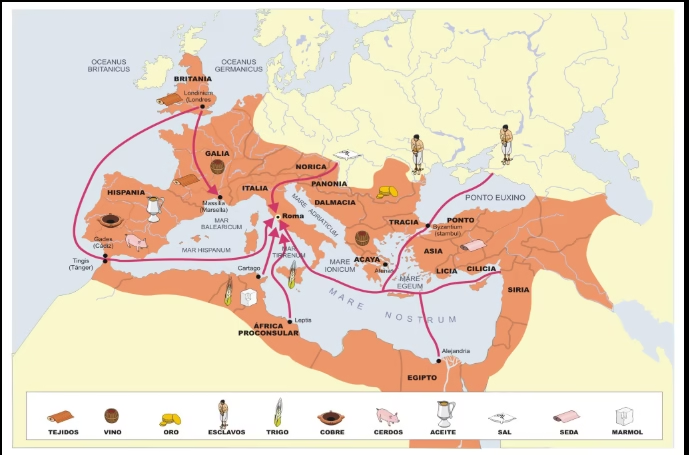
The Pax Romana (“Roman Peace”) lasted nearly 200 years.
It was characterized by:
- Stable government
- Expanding trade
- Population growth
- Cultural development
- Economic prosperity
Roman merchants traded with:
- India
- China
- Arabia
- Africa
Luxury goods such as silk, spices, ivory, and precious gems flowed into Rome.
The Five Good Emperors
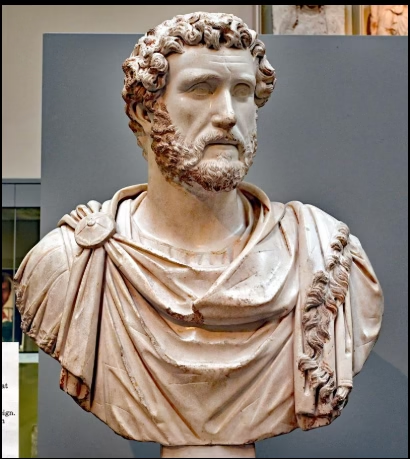
Many historians consider the period from 96–180 AD to be Rome’s greatest era.
Nerva
Restored political stability.
Trajan
Expanded the empire to its largest territorial extent.
Hadrian
Strengthened borders and built Hadrian’s Wall in Britain.
Antoninus Pius
Ruled during one of Rome’s most peaceful periods.
Marcus Aurelius
The philosopher-emperor wrote Meditations, one of history’s greatest works on Stoic philosophy.
Roman Society and Daily Life
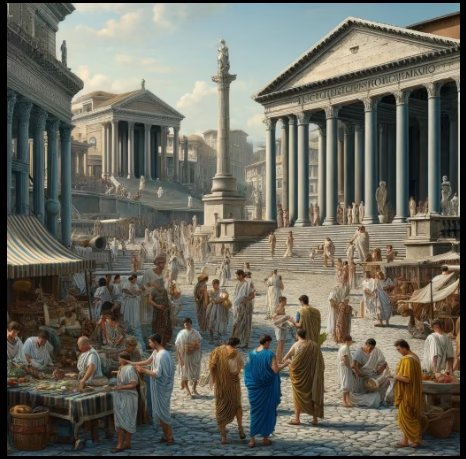
Roman society was remarkably diverse.
Classes included:
- Senators
- Equestrians
- Merchants
- Soldiers
- Farmers
- Craftsmen
- Enslaved people
Cities featured:
- Markets
- Public baths
- Libraries
- Forums
- Amphitheaters
- Aqueducts
The Colosseum hosted gladiator contests, animal hunts, and public spectacles that attracted tens of thousands of spectators.
Roman Engineering and Architecture
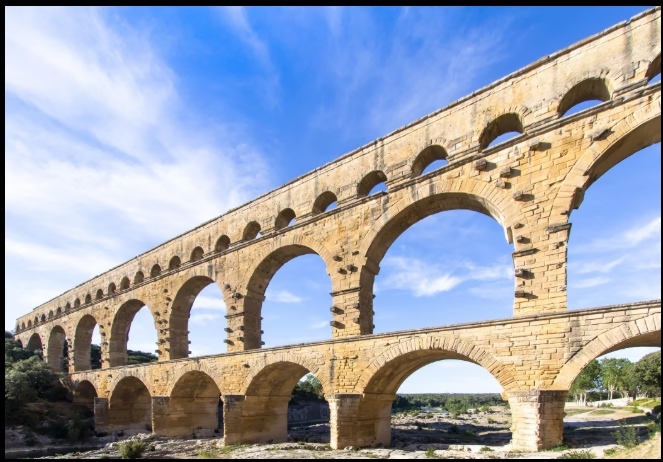
Roman engineering transformed the ancient world.
Major innovations included:
Roman Roads
Over 250,000 miles of roads connected the empire.
Aqueducts
Delivered fresh water across long distances.
Concrete
Roman concrete enabled stronger, longer-lasting buildings.
The Pantheon
Its enormous dome remains one of history’s greatest architectural achievements.
The Colosseum
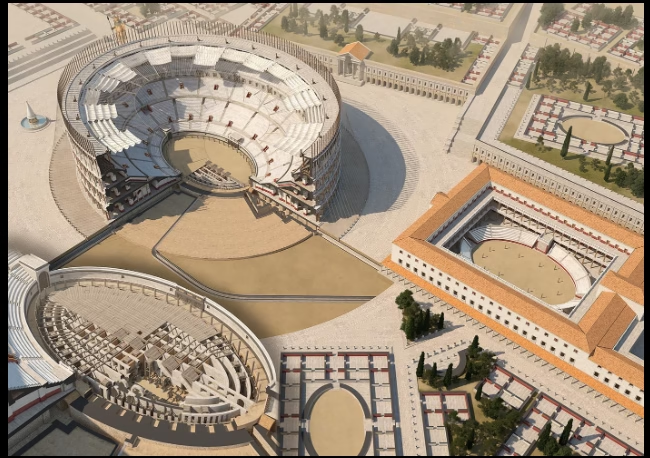
An engineering masterpiece capable of seating around 50,000 spectators.
Religion and the Rise of Christianity
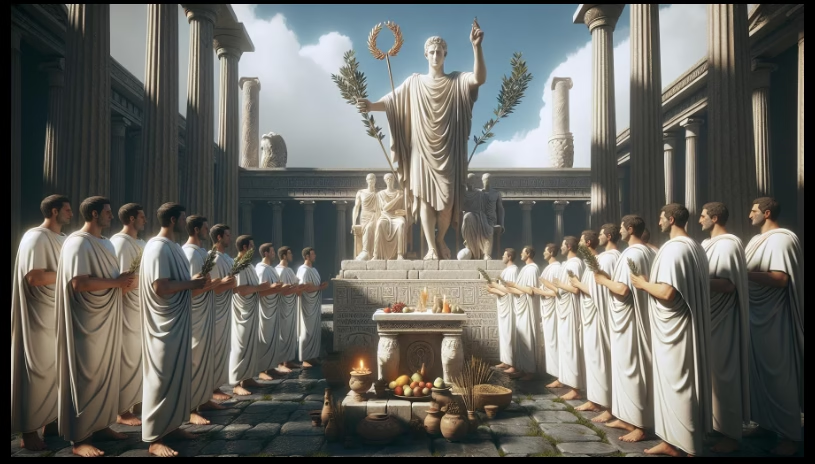
Romans initially worshipped many gods including:
- Jupiter
- Mars
- Venus
- Neptune
During the first century AD, Christianity emerged within the empire.
Initially persecuted, Christians later gained acceptance.
A turning point came in 313 AD when Emperor Constantine issued the Edict of Milan, granting religious tolerance.
Christianity eventually became the empire’s dominant religion.
The Crisis of the Third Century
Between 235 and 284 AD, Rome nearly collapsed.
Challenges included:
- Civil wars
- Economic inflation
- Foreign invasions
- Political assassinations
- Disease outbreaks
More than twenty emperors ruled during this turbulent period.
Why Did the Roman Empire Fall?
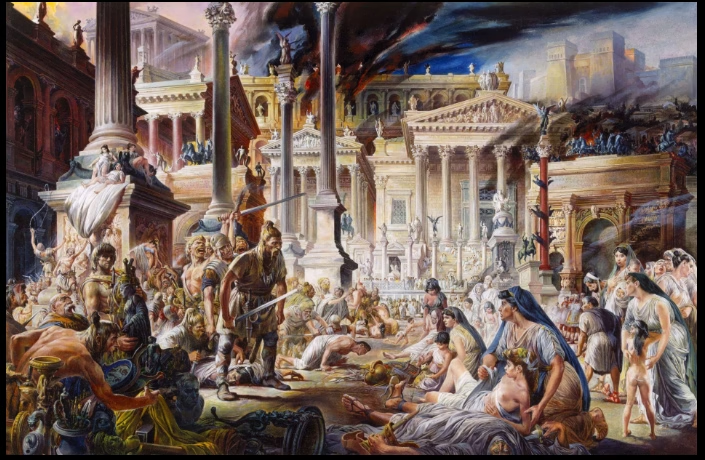
There was no single cause.
Instead, several factors combined over centuries.
Political Instability
Frequent assassinations and civil wars weakened leadership.
Economic Problems
Heavy taxation, inflation, and declining trade damaged the economy.
Military Pressure
Germanic tribes, Goths, Huns, and Vandals repeatedly invaded Roman territory.
Division of the Empire
Emperor Diocletian divided the empire into Eastern and Western halves.
Although this improved administration, it also weakened unity.
Internal Decline
Corruption, population decline, and reduced civic participation gradually eroded Roman strength.
The Fall of the Western Roman Empire
Important events include:
- 410 AD — Rome sacked by the Visigoths
- 451 AD — Battle against Attila the Hun
- 455 AD — Vandals sack Rome
- 476 AD — Odoacer deposes Romulus Augustulus
This event traditionally marks the end of the Western Roman Empire.
The Eastern Roman (Byzantine) Empire continued for nearly another thousand years before Constantinople fell in 1453.
Legacy of the Roman Empire
Rome’s influence remains visible everywhere.
Its legacy includes:
Government
Many democratic systems borrow concepts from the Roman Republic.
Law
Roman law influenced modern legal systems worldwide.
Engineering
Roads, bridges, aqueducts, and public buildings inspired later civilizations.
Language
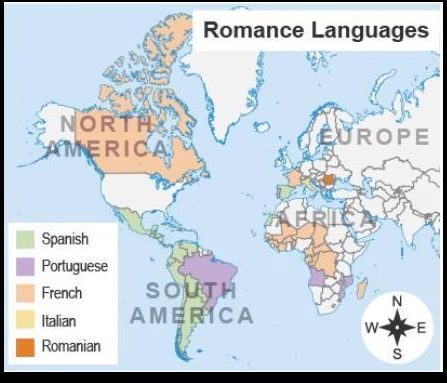
Latin evolved into:
- Spanish
- French
- Italian
- Portuguese
- Romanian
Architecture
Columns, arches, domes, and amphitheaters continue to influence modern design.
Military Strategy
Roman organization remains studied in military academies.
Roman Empire Timeline
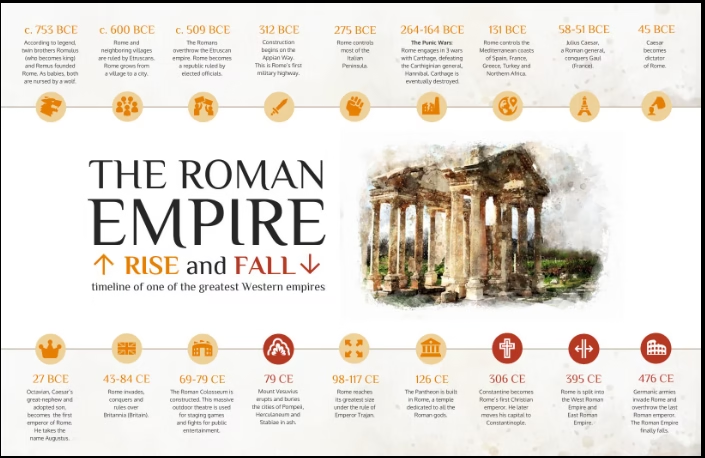
| Year | Event |
|---|---|
| 753 BC | Traditional founding of Rome |
| 509 BC | Roman Republic established |
| 264–146 BC | Punic Wars |
| 44 BC | Julius Caesar assassinated |
| 27 BC | Augustus becomes first emperor |
| 96–180 AD | Five Good Emperors |
| 313 AD | Edict of Milan |
| 330 AD | Constantinople becomes capital |
| 410 AD | Sack of Rome |
| 476 AD | Western Roman Empire falls |
| 1453 AD | Byzantine Empire ends |
Frequently Asked Questions
Who founded Rome?
According to Roman legend, Romulus founded Rome in 753 BC after defeating his twin brother Remus.
Why was Julius Caesar important?
He expanded Roman territory, reformed government, and paved the way for the Roman Empire through his military and political achievements.
Who was Rome’s first emperor?
Augustus (formerly Octavian) became the first Roman emperor in 27 BC.
Why did the Roman Empire collapse?
Historians generally attribute the fall to a combination of political instability, economic problems, military invasions, administrative challenges, and long-term internal decline rather than a single cause.
What was the Pax Romana?
It was a roughly two-century period of relative peace and stability that allowed trade, culture, and infrastructure to flourish across much of the Roman Empire.
Conclusion
The Roman Empire remains one of history’s greatest civilizations because its achievements extended far beyond conquest. It pioneered systems of law, governance, engineering, architecture, and infrastructure that continue to influence modern societies. While the Western Empire eventually fell, Rome’s ideas endured through the Byzantine Empire, Renaissance scholarship, and the institutions that shape the modern world.
Suggested Internal Links
- High-Income Remote Jobs and Side Hustles in 2026
- Warren Buffett Investment Strategy
- Student Loan Repayment USA 2026
- Investing for Growth with $100
External Links (High Authority)
- Encyclopaedia Britannica – Ancient Rome: https://www.britannica.com/place/ancient-Rome
- The British Museum – Roman Empire Collection: https://www.britishmuseum.org/collection/galleries/roman-empire
- World History Encyclopedia – Roman Empire: https://www.worldhistory.org/Roman_Empire/
- History.com – Ancient Rome: https://www.history.com/topics/ancient-rome
- UNESCO World Heritage Centre: https://whc.unesco.org/
- The Metropolitan Museum of Art – Ancient Rome: https://www.metmuseum.org/