
About This Guide: This article is written for educational purposes to help adults struggling with poor sleep understand and apply evidence-based strategies. All techniques referenced are supported by research from the CDC, NIH, American Academy of Sleep Medicine (AASM), and peer-reviewed journals. For persistent sleep disorders, please consult a licensed sleep specialist or physician.

Table of Contents
- Why Sleep Quality Matters More Than Sleep Duration
- The 4 Stages of Sleep — And Why They All Matter
- What Is Destroying Your Sleep Quality? (Common Causes)
- How to Improve Sleep Quality: 12 Proven Strategies
- How to Design the Perfect Sleep Environment
- The Best and Worst Foods for Sleep
- How to Create a Sleep Routine That Actually Works
- When Poor Sleep Is a Medical Issue
- People Also Ask (FAQs)
1. Why Sleep Quality Matters More Than Sleep Duration {#why-sleep-quality-matters}
Most people focus on how many hours they sleep. But the research is clear: how well you sleep matters as much as how long you sleep.
You can spend 8 hours in bed and still wake up exhausted if your sleep is fragmented, shallow, or repeatedly disrupted. Conversely, 6.5 hours of deep, uninterrupted sleep can leave you more refreshed than a restless 9-hour night.
The stakes are high. According to the CDC, 1 in 3 American adults don’t get enough quality sleep — a public health crisis linked to:
- A 2–3x higher risk of developing Type 2 diabetes (NIH)
- 48% higher risk of heart disease (European Heart Journal, 2021)
- Significantly impaired immune response — even one night of poor sleep reduces natural killer cell activity by up to 70% (UCSF, 2019)
- Cognitive decline equivalent to being legally drunk after 17–19 hours of wakefulness (source: Nature, 2000)
- Higher rates of depression, anxiety, and emotional dysregulation
This isn’t about feeling groggy. Poor sleep is a direct threat to your long-term health. The good news? Sleep quality is highly improvable — with the right strategies.
2. The 4 Stages of Sleep — And Why They All Matter {#stages-of-sleep}
To improve your sleep, you need to understand what healthy sleep actually looks like. Each night, your brain cycles through four distinct stages approximately every 90 minutes.
| Stage | Type | Duration per Cycle | Key Functions |
|---|---|---|---|
| Stage 1 | Light NREM | 1–5 minutes | Transition to sleep; easily woken |
| Stage 2 | Light NREM | 10–25 minutes | Body temperature drops; heart rate slows |
| Stage 3 | Deep NREM (Slow-Wave) | 20–40 minutes | Physical repair, immune function, memory consolidation |
| Stage 4 | REM Sleep | 10–60 minutes (increases each cycle) | Emotional processing, creativity, dream consolidation |
A healthy night includes 4–6 complete cycles. Most deep (Stage 3) sleep occurs in the first half of the night; most REM sleep in the second half. This is why cutting sleep short by even 60–90 minutes disproportionately eliminates your REM sleep — affecting mood, learning, and emotional resilience the next day.
3. What Is Destroying Your Sleep Quality? (Common Causes) {#causes-poor-sleep}
Before applying solutions, identify which of these common disruptors is affecting you most.
Lifestyle Disruptors
- Irregular sleep schedules — shift work, late weekends, or no consistent bedtime confuses your circadian rhythm
- Evening screen exposure — blue light from phones, laptops, and TVs suppresses melatonin production by up to 50% (Harvard Health)
- Late-night eating — eating within 2–3 hours of sleep elevates core body temperature and disrupts sleep onset
- Alcohol — while it helps you fall asleep faster, alcohol suppresses REM sleep and causes fragmented second-half-of-night sleep
- Caffeine — with a half-life of 5–7 hours, a 3 PM coffee still has half its stimulant effect at 10 PM
Environmental Disruptors
- Bedroom temperature above 19°C (67°F)
- Light exposure (even small amounts from phone standby lights)
- Noise disturbances
- An unsupportive mattress or pillow
Psychological Disruptors
- Stress and rumination (the most common cause of acute insomnia)
- Anxiety disorders
- Depression (associated with both hypersomnia and insomnia)
- “Sleep performance anxiety” — worrying about not sleeping, which itself prevents sleep
Medical Disruptors
- Sleep apnea (affects approximately 26% of adults aged 30–70 — AASM)
- Restless Legs Syndrome (RLS)
- Chronic pain conditions
- Thyroid disorders
- Certain medications (beta-blockers, antidepressants, corticosteroids)
4. How to Improve Sleep Quality: 12 Proven Strategies {#12-strategies}
These twelve techniques are drawn from clinical sleep research and behavioral sleep medicine. Start with the first three — they have the largest evidence base and broadest applicability.
Strategy 1: Fix Your Circadian Rhythm With a Consistent Sleep Schedule
Best for: Almost everyone. This is the single highest-impact sleep intervention.
Your circadian rhythm is a 24-hour internal clock that regulates sleep, body temperature, hormone release, and metabolism. It thrives on consistency and is disrupted by irregularity.
How to do it:
- Choose a fixed wake time — and stick to it every day, including weekends
- Work backward to determine your target bedtime (7–9 hours earlier)
- For the first two weeks, prioritize the wake time over the bedtime
- Use bright light exposure within 30 minutes of waking to anchor your rhythm
Research from the American Academy of Sleep Medicine consistently shows that schedule consistency improves sleep quality more than any supplement or sleep aid.
Strategy 2: Get Morning Sunlight Within 30 Minutes of Waking
Best for: Anyone with delayed sleep timing, low morning energy, or seasonal mood dips
Light is the primary signal your brain uses to set its internal clock. Morning sunlight triggers cortisol (a healthy morning wake signal), suppresses residual melatonin, and — critically — programs your brain to release melatonin ~14–16 hours later, at your natural bedtime.
How to do it:
- Step outside within 30 minutes of waking
- Aim for 10 minutes on cloudy days, 5 minutes on sunny days (no sunglasses for the first few minutes)
- Overcast sky still delivers 10,000–50,000 lux; indoor lighting typically delivers only 100–500 lux — not enough to anchor your clock
This technique, popularized by neuroscientist Dr. Andrew Huberman (Stanford), is supported by decades of circadian biology research and costs nothing.

Strategy 3: Eliminate Blue Light 60–90 Minutes Before Bed
Best for: Anyone using screens in the evening (nearly everyone)
Blue light wavelengths (400–490nm) are the primary suppressor of melatonin — the hormone that signals to your brain it’s time to sleep. A Harvard study found that blue light suppressed melatonin for twice as long as green light and shifted circadian rhythms by up to 3 hours.
Practical implementation:
- Enable Night Shift (iOS) or Night Light (Android/Windows) after 8 PM
- Use blue-light blocking glasses if screens are unavoidable
- Switch to dim, warm-toned lighting in your home after sunset
- Replace evening scrolling with reading (physical books), light stretching, or conversation
Strategy 4: Optimize Your Bedroom Temperature
Best for: Anyone who wakes during the night, feels too hot, or struggles to fall asleep
Your core body temperature must drop by approximately 1–2°C (2–3°F) to initiate sleep. A cool bedroom accelerates this process; a warm one fights it.
The optimal sleep temperature: 15.6–19.4°C (60–67°F), according to the National Sleep Foundation.
How to cool your sleep environment:
- Use breathable, natural-fiber bedding (cotton, bamboo, linen)
- Consider a fan or cooling mattress pad
- Take a warm shower 1–2 hours before bed — counterintuitively, this accelerates the post-shower temperature drop that triggers sleepiness
- Keep feet warm if the room is cold (warm extremities help redistribute core heat)
Strategy 5: Practice Cognitive Behavioral Therapy for Insomnia (CBT-I)
Best for: Chronic insomnia, sleep anxiety, anyone who “can’t turn off their brain”
CBT-I is the gold standard treatment for chronic insomnia, recommended as the first-line treatment over sleep medication by the American College of Physicians, the AASM, and the NHS. Multiple meta-analyses show it outperforms sleeping pills — with effects that last long after treatment ends.
Core CBT-I techniques:
Sleep Restriction Therapy: Temporarily limit time in bed to match actual sleep time (e.g., if you sleep 5 hours, only allow 5 hours in bed). This builds sleep drive and consolidates fragmented sleep. Gradually extend as efficiency improves.
Stimulus Control: Use your bed only for sleep and sex. No reading, scrolling, working, or watching TV in bed. This rebuilds the brain’s association between bed and sleep.
Sleep Scheduling: Fixed wake times (see Strategy 1) combined with a “sleep window” that expands only as sleep improves.
Cognitive Restructuring: Challenge catastrophic thoughts about sleep: “I’ll never function tomorrow if I don’t sleep” → “I’ve coped with less sleep before. My body will get the sleep it needs.”
Digital CBT-I programs (like Sleepio and Somryst, FDA-cleared) make this approach accessible without a therapist.
Strategy 6: Use the “4-7-8” Breathing Method to Fall Asleep Faster
Best for: Racing thoughts at bedtime, anxiety-driven insomnia, physical tension
Developed by Dr. Andrew Weil (Harvard-trained physician), the 4-7-8 breathing method activates the parasympathetic nervous system, reducing heart rate and cortisol within minutes.
How to do it:
- Exhale completely through your mouth
- Close your mouth and inhale through your nose for 4 counts
- Hold your breath for 7 counts
- Exhale completely through your mouth for 8 counts
- Repeat 3–4 cycles
The extended exhale is key — it’s longer than the inhale, which directly activates the vagus nerve and shifts your nervous system into rest mode.
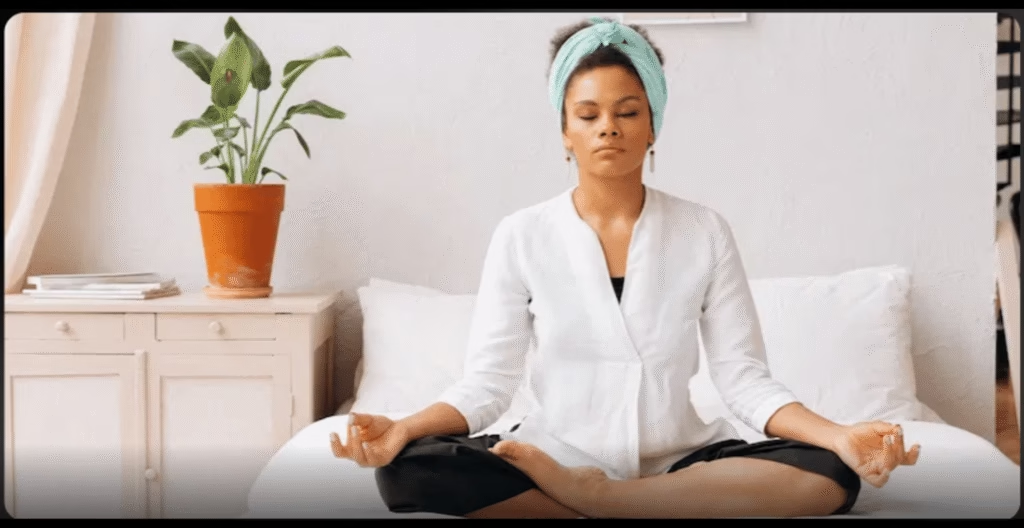
Strategy 7: Limit Caffeine After 1–2 PM
Best for: Anyone who consumes coffee, tea, energy drinks, or pre-workout supplements
Caffeine blocks adenosine receptors — adenosine is the brain chemical that builds “sleep pressure” throughout the day. By blocking it, caffeine tricks your brain into feeling less tired. But adenosine doesn’t disappear; it waits.
The half-life problem: Caffeine’s half-life is 5–7 hours. A 200mg coffee at 3 PM leaves 100mg still active at 8–10 PM — enough to delay sleep onset and suppress deep sleep even if you fall asleep normally.
Practical rules:
- Cut caffeine by 1–2 PM (earlier for caffeine-sensitive individuals)
- Remember: tea, matcha, dark chocolate, and some pain relievers also contain caffeine
- If you need an afternoon energy boost, try a 10–20 minute “nap + caffeine” combo: drink a coffee, then immediately nap for 20 minutes — you wake up just as the caffeine kicks in
Strategy 8: Exercise Regularly — But Time It Right
Best for: Deep sleep, sleep duration, mood regulation, reducing insomnia
Regular physical exercise is one of the most powerful sleep quality enhancers available. A 2021 meta-analysis in Sleep Medicine Reviews found that exercise significantly improved sleep quality, reduced insomnia severity, and increased slow-wave (deep) sleep duration.
Timing matters:
- Morning or afternoon exercise: Ideal — supports circadian rhythm and raises body temperature early
- Evening exercise (before 7 PM): Generally fine for most people
- Vigorous exercise within 2–3 hours of bed: Can delay sleep onset in some individuals by elevating adrenaline and body temperature
Even a 30-minute daily walk improves sleep quality measurably. You don’t need intense workouts to see benefits.
Strategy 9: Create a 30-Minute Wind-Down Ritual
Best for: People who struggle to “switch off,” evening overthinkers, high-stress lifestyles
Your brain needs a transition period between “active day mode” and “sleep mode.” Going from intense work or stimulating screens directly to bed is like sprinting and then trying to stop instantly.
A sample 30-minute wind-down ritual:
- T-30 min: Dim all lights; switch screens to night mode or off
- T-25 min: Light stretching or gentle yoga (5 minutes)
- T-20 min: Warm shower or bath
- T-10 min: Journaling — write tomorrow’s to-do list (offloads mental load) and 3 things you’re grateful for
- T-5 min: Reading (physical book or e-ink reader) in bed
- Lights out at your fixed bedtime
Consistency is the key. The ritual itself becomes a sleep cue — your brain learns that this sequence signals sleep is coming.

Strategy 10: Manage Stress and Worry Before Bed
Best for: Anyone who lies awake rehearsing problems or planning tomorrow
The most common reason people can’t fall asleep isn’t physical — it’s a racing, problem-solving mind that hasn’t been given permission to stop.
The “Worry Time” technique:
- Schedule 15 minutes in the early evening as dedicated “worry time”
- Write down all concerns, unresolved problems, and anxious thoughts
- For each, write one small next action you could take
- When worries arise at bedtime, remind yourself: “I’ve already handled this. It’s scheduled.”
This technique, validated in multiple CBT studies, significantly reduces pre-sleep cognitive arousal — the technical term for what most people call “overthinking.”
Strategy 11: Use Magnesium Glycinate for Sleep Support
Best for: Anyone with difficulty staying asleep, muscle tension, or confirmed magnesium deficiency
Magnesium is involved in over 300 enzymatic reactions — including the regulation of GABA, the primary inhibitory neurotransmitter that promotes calm and sleep. Studies estimate that up to 50% of Americans are magnesium deficient (NIH Office of Dietary Supplements).
Evidence base: A 2021 review in Nutrients found that magnesium supplementation improved sleep onset, sleep duration, and sleep efficiency in older adults with insomnia.
Recommended form: Magnesium glycinate (200–400mg, taken 30–60 minutes before bed) — better absorbed and gentler on digestion than magnesium oxide.
Important: Always consult your doctor before starting any supplement, especially if you have kidney disease or take medications.
Strategy 12: Limit Alcohol — Especially Within 3 Hours of Bed
Best for: Anyone who uses alcohol to “unwind” or fall asleep
Alcohol is one of the most misunderstood sleep disruptors. Yes, it helps you fall asleep faster. But it fundamentally destroys sleep quality in the second half of the night.
Alcohol suppresses REM sleep and causes the body to process it as it metabolizes — leading to fragmented sleep, early waking (typically 3–4 AM), night sweats, and next-day grogginess even after a full night in bed.
Matthew Walker, sleep scientist and author of Why We Sleep (UC Berkeley), calls alcohol “one of the most powerful suppressors of REM sleep that we know of.”
Practical rule: Avoid alcohol within 3 hours of sleep. If drinking socially, match each alcoholic drink with a glass of water to support metabolism.
5. How to Design the Perfect Sleep Environment {#sleep-environment}
Your bedroom should be optimized for three things: cool, dark, and quiet.
Temperature: 15.6–19.4°C (60–67°F) — see Strategy 4
Darkness:
- Use blackout curtains or a sleep mask
- Cover all LED standby lights (even small ones disrupt melatonin)
- Consider red-spectrum nightlights if you need to navigate at night (red light has minimal melatonin impact)
Sound:
- Use earplugs, a white noise machine, or a brown noise app for consistent background sound
- White noise masks sudden disruptive sounds (traffic, partners snoring) without stimulating the brain
Bedding:
- Invest in a supportive mattress suited to your sleep position (side sleepers need softer support; back sleepers need firmer)
- Natural fiber pillowcases (cotton, bamboo) regulate temperature better than synthetics
Scent (optional but effective):
- Lavender aromatherapy has demonstrated modest but consistent sleep-improving effects in multiple studies (source: Journal of Alternative and Complementary Medicine)
6. The Best and Worst Foods for Sleep {#foods-for-sleep}
What you eat — and when — has a measurable impact on sleep quality.
Best Foods for Sleep
| Food | Why It Helps |
|---|---|
| Tart cherry juice | Natural melatonin source; studies show it increases sleep time by ~84 minutes |
| Kiwi fruit | High in serotonin precursors; 2 kiwis before bed improved sleep in a 4-week study |
| Fatty fish (salmon, mackerel) | Rich in omega-3s and Vitamin D — both linked to serotonin production |
| Walnuts | Contain melatonin, serotonin, and magnesium |
| Warm milk or chamomile tea | Glycine and L-theanine promote relaxation without sedation |
| Whole grains | Stabilize blood sugar overnight, preventing 3 AM cortisol spikes |
Worst Foods for Sleep
| Food/Drink | Why It Disrupts Sleep |
|---|---|
| Caffeine | Blocks adenosine; suppresses deep sleep |
| Alcohol | Suppresses REM; causes 2nd-half fragmentation |
| High-sugar foods | Blood sugar crashes trigger cortisol release at night |
| Spicy or acidic foods | Elevate body temperature; worsen acid reflux in horizontal position |
| High-fat heavy meals | Slow digestion; disrupt sleep architecture |
Ideal timing: Finish your last meal 2–3 hours before bed. A small, sleep-friendly snack (banana + nut butter, or a small bowl of oatmeal) is fine if you’re genuinely hungry.

7. How to Create a Sleep Routine That Actually Works {#sleep-routine}
Here’s a complete sample daily sleep routine based on the strategies above. Adapt the times to your schedule.
Sample Sleep Routine (Target Bedtime: 10:30 PM)
| Time | Action | Why |
|---|---|---|
| 6:30 AM | Wake at fixed time; go outside within 30 min | Anchors circadian rhythm |
| 7:00 AM | Morning sunlight (10 min) | Sets melatonin timer for 14–16 hrs later |
| 1:00 PM | Last caffeine of the day | Clears system before bedtime |
| 5:30 PM | Exercise (30–60 min moderate intensity) | Boosts slow-wave sleep |
| 7:30 PM | Last full meal | Allows 3-hr digestion window |
| 8:30 PM | Worry time / journaling (15 min) | Offloads mental load before wind-down |
| 9:30 PM | Dim lights; screens off or night mode | Begins melatonin rise |
| 9:45 PM | Warm shower | Triggers temperature drop |
| 10:00 PM | Gentle stretching or reading | Wind-down cue |
| 10:30 PM | Lights out — fixed bedtime | Consolidates sleep drive |
8. When Poor Sleep Is a Medical Issue {#medical-sleep-issues}
If you’ve applied consistent sleep hygiene for 4+ weeks and still struggle, your poor sleep may have a medical root cause.
See a doctor or sleep specialist if you experience:
- Loud snoring, gasping, or breath-holding during sleep (possible sleep apnea)
- Uncomfortable urge to move your legs at night (Restless Legs Syndrome)
- Acting out dreams physically (REM Sleep Behavior Disorder)
- Excessive daytime sleepiness despite adequate sleep time (narcolepsy or idiopathic hypersomnia)
- Persistent insomnia for more than 3 months (chronic insomnia disorder)
A sleep study (polysomnography) can diagnose most sleep disorders definitively. Many are now available as home sleep tests through your GP or a sleep clinic.
Undiagnosed sleep apnea is particularly important to rule out — it affects 1 in 4 men and 1 in 9 women, frequently goes undiagnosed for years, and significantly increases risk of hypertension, stroke, and heart disease.
9. People Also Ask (FAQs) {#faqs}
What is the fastest way to improve sleep quality?
The fastest improvements typically come from three simultaneous changes: setting a fixed wake time (and sticking to it), eliminating screens 60 minutes before bed, and keeping your bedroom below 19°C. Most people notice a meaningful improvement within 3–7 days of applying all three consistently.
How many hours of sleep do adults actually need?
The CDC and AASM recommend 7–9 hours per night for adults aged 18–64, and 7–8 hours for adults 65+. However, quality matters as much as quantity. Seven hours of consolidated, deep sleep outperforms nine hours of fragmented, shallow sleep.
Why do I wake up at 3 AM every night?
Waking around 3–4 AM is extremely common and usually has one of three causes: alcohol consumption earlier in the evening (as it metabolizes, it causes arousal), blood sugar dips (especially after high-sugar or high-carb evening meals), or a natural circadian dip in core body temperature. Addressing the likely cause — reducing alcohol, eating a small slow-digesting snack, or cooling your bedroom — resolves this for most people.
Is it bad to use your phone in bed?
Yes — for two distinct reasons. First, blue light from screens suppresses melatonin, delaying sleep onset. Second, the social and cognitive stimulation of scrolling (news, social media) increases mental arousal, making it harder to wind down. Using your phone in bed also trains your brain to associate bed with wakefulness, which gradually worsens insomnia.
Does melatonin actually help with sleep?
Melatonin is effective for shifting sleep timing (jet lag, shift work, delayed sleep phase) but is only modestly effective for general insomnia. It is a timing signal, not a sedative. Typical effective doses are much lower than most supplements provide: 0.5–1 mg is often sufficient, while the common 5–10 mg doses found in stores may actually be counterproductive. The NIH advises using the lowest effective dose.
What foods help you sleep better at night?
Foods with the strongest sleep-supporting evidence include tart cherry juice (natural melatonin), kiwi fruit (serotonin precursors), fatty fish (omega-3s and vitamin D), walnuts (melatonin and magnesium), and chamomile tea (apigenin, a mild sedative compound). Eat the last full meal 2–3 hours before bed.
Can exercise help you sleep better?
Yes — extensively. Regular aerobic exercise increases slow-wave (deep) sleep, reduces time to fall asleep, and decreases nighttime awakenings. A 2021 meta-analysis in Sleep Medicine Reviews confirmed these effects across multiple populations. Aim for at least 150 minutes of moderate exercise per week; even daily walking shows measurable sleep benefits.
What is sleep hygiene and why does it matter?
Sleep hygiene refers to the collection of behavioral and environmental practices that promote consistent, high-quality sleep. It includes consistent sleep/wake schedules, a dark and cool bedroom, limiting caffeine and alcohol, and pre-sleep wind-down routines. Good sleep hygiene is the foundation of all other sleep improvement strategies — without it, supplements and other interventions are far less effective.
Key Takeaways
- Sleep quality matters as much as sleep quantity — fragmented sleep undermines health even at 8 hours.
- The three highest-impact changes you can make tonight: fix your wake time, kill screens 60 minutes early, and cool your bedroom.
- CBT-I is the most effective long-term treatment for chronic insomnia — more effective than sleep medication.
- Morning sunlight and evening darkness are your most powerful tools for resetting your circadian rhythm.
- If sleep problems persist despite consistent effort, rule out medical causes — especially sleep apnea, which is vastly underdiagnosed.
- You are not broken. Sleep is a skill, and like all skills, it improves with the right knowledge and consistent practice.
Last updated: June 2026 | Sources: CDC, NIH, American Academy of Sleep Medicine, National Sleep Foundation, Harvard Health, UC Berkeley, Sleep Medicine Reviews, Nutrients (Journal)
This article is for informational purposes only and does not constitute medical advice. Please consult a qualified healthcare professional or sleep specialist for personal diagnosis and treatment.