

Vitamin D is often mistaken for “just another vitamin,” but it actually functions more like a hormone in the human body. Because nearly every cell and tissue — from your brain to your heart to your immune cells — carries vitamin D receptors, a deficiency can ripple across your health in ways that are easy to miss.
Despite living in a world full of sunshine, vitamin D deficiency has become a genuine global health issue. In some regions, including parts of India, deficiency rates are estimated to reach 76-90% of the population.
This guide walks through the classic and lesser-known warning signs, exactly how to get properly tested, and a practical recovery plan combining sunlight, diet, and supplementation.
Table of Contents
- Classic Warning Signs
- Lesser-Known Symptoms
- Who’s Most at Risk
- How to Get Properly Tested
- The Recovery Plan
- FAQ
Classic Warning Signs {#classic-signs}

Many people with low vitamin D levels are asymptomatic at first, but chronic deficiency tends to eventually show up through a recognizable set of symptoms:
- Bone aches and low back pain: Often the earliest sign, typically felt as a dull achiness in the lumbar spine or pelvis.
- Chronic fatigue: Persistent tiredness that doesn’t improve with sleep, linked to vitamin D’s role in supporting mitochondrial function — your cells’ energy-producing machinery.
- Frequent infections: Vitamin D acts as an immune modulator, so catching every cold or flu that goes around can be a subtle sign levels have dropped.
- Muscle weakness: Difficulty standing up from a seated or squatting position is a well-documented hallmark of deficiency, particularly in older adults.
Lesser-Known Symptoms {#bizarre-symptoms}
Beyond the classic signs, chronic deficiency can show up in ways that seem unrelated to vitamin levels at first glance:

- Excessive head sweating: Particularly common in infants, but also reported in adults with low levels.
- Procrastination and low motivation: Emerging research links vitamin D to dopamine regulation in the brain’s reward centers.
- Mood swings and “winter blues”: Low levels are consistently associated with increased anxiety, irritability, and depressive symptoms, especially during darker months.
- Difficulty feeling satisfied after meals: Vitamin D appears to interact with leptin, the hormone responsible for signaling fullness to the brain.
- Slow wound healing: Vitamin D plays a role in producing keratinocytes, the skin cells responsible for tissue repair.
Quick self-check: Try the “30-second shin test” — press your thumb firmly against your shin bone for a few seconds. Noticeable pain or tenderness can be an informal indicator worth following up with an actual blood test, though it’s not a diagnostic tool on its own.
Who’s Most at Risk {#risk-factors}
Several factors can interfere with your body’s ability to maintain healthy vitamin D levels:
- Geography and season: People living at higher latitudes (UK, Canada, Northern US) often can’t produce meaningful vitamin D from sunlight during winter months, regardless of time spent outdoors.
- Skin tone: Individuals with more melanin in their skin require significantly longer sun exposure to generate the same amount of vitamin D as those with lighter skin.
- Age: Aging skin becomes less efficient at synthesizing vitamin D from UVB exposure.
- Body composition: Because vitamin D is fat-soluble, it can become sequestered in adipose tissue, reducing how much circulates actively in the bloodstream.
- Certain medications: Steroids (such as prednisone), some weight-loss medications, and anti-seizure medications can all interfere with vitamin D metabolism.
How to Get Properly Tested {#testing}
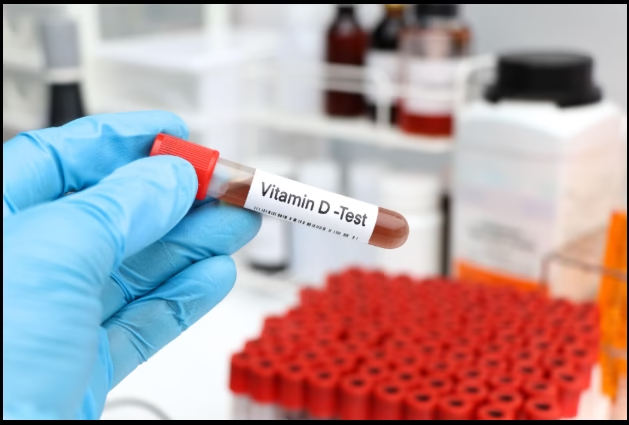
If you suspect low vitamin D, don’t guess — request a blood test and confirm you’re getting the right one.
- The correct test: Ask specifically for a 25-hydroxy vitamin D test, often written as 25(OH)D.
- Understanding your results:
| Result | 25(OH)D Level |
|---|---|
| Deficient | Below 20 ng/mL (50 nmol/L) |
| Insufficient | 20-30 ng/mL |
| Optimal (per many clinicians) | 40-60 ng/mL (100-150 nmol/L) |
Reference ranges can vary slightly between labs, so it’s worth discussing your specific results with your doctor rather than relying on general benchmarks alone.
The Recovery Plan: Sunlight, Diet & Supplements {#recovery-plan}
1. Optimize Sunlight Exposure
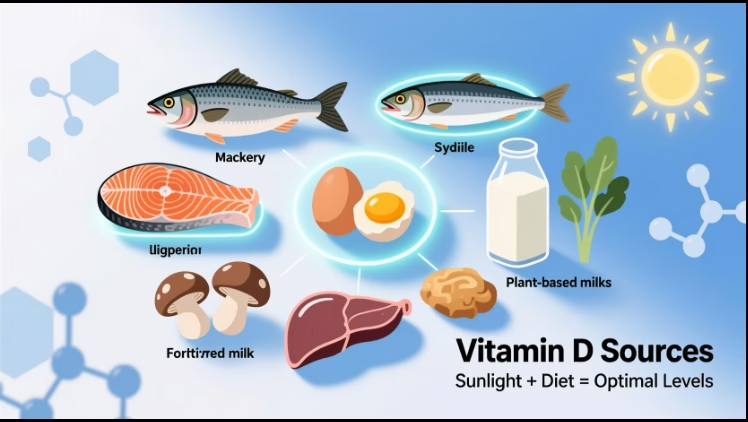
Sunlight remains the most natural way to raise vitamin D levels. For fair-skinned individuals, roughly 15-30 minutes of unprotected sun exposure on the face, arms, and legs a few times a week is often enough.
- Timing matters: UVB rays — the wavelength responsible for vitamin D synthesis — are strongest between 10:00 AM and 2:00 PM.
- A key limitation: Both sunscreen and glass windows block the specific UVB wavelengths needed to produce vitamin D, so sunlight through a car or office window won’t help.
2. Dietary Sources
Food alone rarely provides enough vitamin D, but these sources meaningfully contribute:
- Fatty fish: Salmon, mackerel, and sardines are among the richest natural dietary sources.
- Cod liver oil: Roughly one tablespoon provides about 1,500 IU.
- Sun-exposed mushrooms: Mushrooms can generate significant vitamin D when exposed to direct sunlight for several hours before cooking.
3. Smart Supplementation
When sunlight isn’t consistently available, supplementation becomes the most reliable option.
- Choose D3 over D2: Vitamin D3 (cholecalciferol) is generally absorbed and utilized more effectively than the synthetic D2 form sometimes prescribed.
- Take it with fat: Since vitamin D is fat-soluble, pairing your supplement with a meal containing healthy fats (olive oil, avocado, ghee) can meaningfully improve absorption.
- Typical dosing: Maintenance doses commonly range from 1,000-2,000 IU daily, while people with confirmed acute deficiency may be prescribed higher short-term doses under medical supervision. Always confirm your specific dosage with a healthcare provider based on your blood test results.
The Essential Co-Factors
For vitamin D to work correctly — and to avoid calcium being deposited in the wrong places, like arteries or kidneys — two supporting nutrients matter:
- Magnesium: Required to convert vitamin D from its inactive to active form in the body.
- Vitamin K2: Helps direct calcium toward bones and teeth rather than soft tissue.
Recommended D3 + K2 Supplement {#recommended-supplement}

Since D3 and K2 work as a team — D3 raises calcium levels, K2 directs that calcium to the right place — a combined formula can be a practical way to cover both nutrients without tracking two separate supplements. One widely used option:
Sports Research® Vitamin D3 + K2 w/ Coconut Oil — Vegan Vitamin D 5000iu & Mk7 Vitamin K 100mcg, 60 Softgels
- 5000 IU of D3 paired with 100mcg of K2 (as MK-7, the more bioavailable form of K2)
- Vegan-certified: D3 sourced from lichen rather than the more common animal-derived lanolin, K2 from fermented chickpeas
- Delivered in coconut MCT oil to support absorption of these fat-soluble vitamins
- Non-GMO Project Verified, soy-free, and free of common allergen fillers
👉 Check Current Price on Amazon →
Frequently Asked Questions {#faq}
What are the first signs of vitamin D deficiency? Bone aches, persistent low back pain, and fatigue that doesn’t improve with rest are typically among the earliest and most common signs, often appearing before more unusual symptoms develop.
Can you have vitamin D deficiency even if you get regular sun exposure? Yes. Factors like darker skin tone, sunscreen use, higher latitude, glass barriers (car and office windows), and age can all significantly reduce how much vitamin D your skin actually produces, even with regular time outdoors.
How much vitamin D should I take daily? General maintenance doses typically range from 1,000-2,000 IU per day for adults, though people with a confirmed deficiency may need higher doses temporarily under a doctor’s guidance. A blood test is the most reliable way to determine your specific needs.
Is vitamin D3 better than vitamin D2? Most research suggests D3 (cholecalciferol) raises and sustains blood levels more effectively than D2 (ergocalciferol), which is part of why D3 is now the more commonly recommended supplement form.
Why do I need magnesium and vitamin K2 with vitamin D? Magnesium is required to convert vitamin D into its active form, while vitamin K2 helps ensure that calcium mobilized by vitamin D goes toward building bone rather than accumulating in arteries or soft tissue.
External Resources for Further Reading
- National Institutes of Health (NIH) — Vitamin D Fact Sheet
- Harvard T.H. Chan School of Public Health — Vitamin D Overview
- Mayo Clinic — Vitamin D Deficiency and Health
- Cleveland Clinic — Vitamin D Deficiency
Recommended Internal Links
- Foods and Remedies That Naturally Boost Immunity: The Evidence-Based Guide
- 10 Best Massagers 2026: Leg, Back, Foot & Massage Guns
- Home Remedies for Lower Back Pain Relief: Evidence-Based Exercises, Stretches, and Daily Habits
- Top Dermatologist-Approved Skin Care Home Remedies for Acne, Eczema, and Dry Skin
- Home Remedies for Cold and Flu Symptoms: The Evidence-Based Guide
- High-Fiber Foods: The Ultimate Guide to Better Gut Health, Digestion & Weight Loss
Disclaimer: This article is for general educational purposes only and is not a substitute for professional medical advice. Always consult a healthcare provider before starting high-dose vitamin D supplementation, particularly if you have kidney disease, are pregnant, or are taking other medications.