
About This Guide: This article is written for adults aged 40–80+ who want a comprehensive, evidence-based roadmap for extending healthspan — not just lifespan. All strategies are drawn from peer-reviewed research published in journals including JAMA, The Lancet, NEJM, Nature Aging, and leading institutions including the NIH, CDC, Mayo Clinic, and Harvard T.H. Chan School of Public Health. This is not medical advice. Please consult your physician before beginning any new exercise program or health intervention.
Table of Contents
- Lifespan vs. Healthspan: The Real Goal of Longevity
- The 5 Biological Pillars of Aging — And How to Slow Each One
- Strength Training for Longevity: Why Muscle Is Your Most Valuable Asset
- How to Protect and Strengthen Your Brain as You Age
- The Longevity Diet: What Science Says About Eating for a Long Life
- Cardiovascular Health and Zone 2 Training for Aging Adults
- Balance, Flexibility, and Fall Prevention
- Preventive Health Screenings by Age: What to Get and When
- Sleep, Stress, and Social Connection: The Underrated Longevity Trio
- Your 12-Week Longevity Starter Plan
- People Also Ask (FAQs)
- Content Cluster: Related Articles
1. Lifespan vs. Healthspan: The Real Goal of Longevity {#lifespan-vs-healthspan}
Most people want to live longer. But the more meaningful question is: how many of those years will you spend healthy, independent, and mentally sharp?
This distinction — between lifespan (total years alive) and healthspan (years lived in good health) — is at the heart of modern longevity science.
The data is sobering. According to the CDC, Americans live an average of 78.8 years — but spend the last 12–16 years dealing with chronic disease, functional decline, disability, or cognitive impairment. That’s roughly 15–20% of life spent in poor health.
The science of longevity is no longer about adding years. It is about compressing morbidity — pushing the period of decline as late and as short as possible, so that you remain active, capable, and cognitively sharp right up until the end of life.
The good news: the most powerful levers for extending healthspan are lifestyle-based, accessible, and backed by decades of evidence. This guide covers all of them.
2. The 5 Biological Pillars of Aging — And How to Slow Each One {#biological-pillars}
Aging is not a single process — it is the cumulative result of multiple biological mechanisms operating simultaneously. The most well-established, drawn from the landmark “Hallmarks of Aging” paper (López-Otín et al., Cell, 2013 — updated 2023), include:
| Hallmark | What It Means | How to Counter It |
|---|---|---|
| Telomere shortening | DNA protective caps erode with each cell division | Exercise, stress reduction, quality sleep |
| Cellular senescence | “Zombie cells” accumulate and drive inflammation | Caloric restriction, fasting, exercise |
| Mitochondrial dysfunction | Energy production in cells declines | Zone 2 cardio, resistance training, CoQ10 |
| Chronic inflammation (“inflammaging”) | Low-grade systemic inflammation accelerates aging | Anti-inflammatory diet, omega-3s, sleep |
| Loss of proteostasis | Protein quality control in cells breaks down | Protein intake, resistance training, autophagy |
Understanding these mechanisms helps explain why the lifestyle strategies in this guide work — they don’t just improve surface-level health metrics. They intervene at the cellular level.
3. Strength Training for Longevity: Why Muscle Is Your Most Valuable Asset {#strength-training}
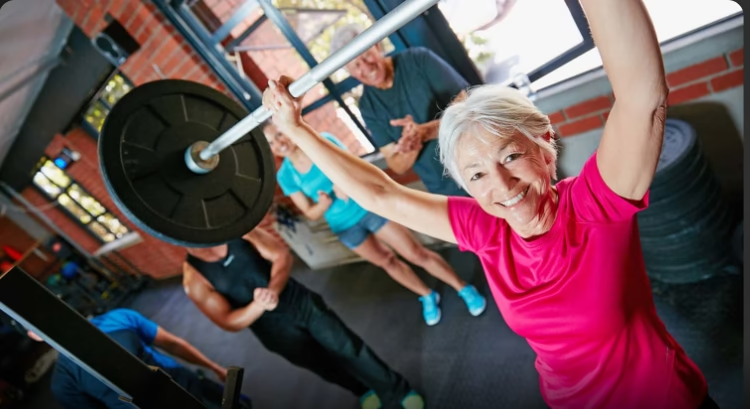
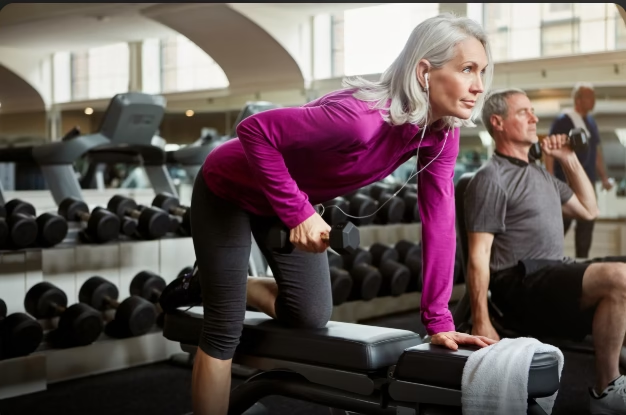
If there is one single intervention with the broadest evidence base for extending healthspan, it is resistance training (strength training).
Here is what the research shows:
- Muscle mass is the strongest predictor of longevity in older adults — outperforming BMI, cholesterol, and even blood pressure in some studies (source: American Journal of Medicine)
- Adults lose 3–8% of muscle mass per decade after age 30, accelerating to 15% per decade after 70 — a process called sarcopenia
- Sarcopenia is directly linked to falls, fractures, metabolic disease, cognitive decline, and premature death
- A 2022 meta-analysis in British Journal of Sports Medicine found that strength training 2–3x per week reduced all-cause mortality by 23% and cardiovascular mortality by 31%
How to Start Strength Training After 50, 60, or 70
The most common barrier is fear — of injury, of looking out of place, of “not knowing how.” The evidence strongly recommends starting regardless of current fitness level, with appropriate progression.
Beginner-Friendly Strength Training Protocol (Weeks 1–8):
Frequency: 2–3 sessions per week, with at least one rest day between sessions
Session Structure (45–60 minutes):
- Warm-Up (10 min): 5 min light walking or cycling + dynamic stretching (leg swings, arm circles, hip rotations)
- Main Work (35–40 min): 3 sets of 10–12 repetitions for each:
- Goblet squat or leg press (lower body compound)
- Seated row or resistance band row (back/pulling)
- Dumbbell chest press (upper body pushing)
- Romanian deadlift or hip hinge (posterior chain)
- Standing overhead press (shoulders)
- Plank hold (core stability — 3 x 20–30 seconds)
- Cool-Down (5–10 min): Static stretching, deep breathing
Progressive Overload Rule: When you can complete 3 sets of 12 reps with good form, increase resistance by 5%. Progression drives adaptation — the same weight forever produces no continued benefit.
Key Safety Principles for Older Adults:
- Prioritize form over weight — always
- Begin with machines or resistance bands if dumbbells feel unstable
- Work with a certified trainer for the first 4–6 sessions
- Allow 48 hours between training the same muscle group
- Joint pain ≠ soreness; stop if you feel sharp or joint pain
Resource: The American College of Sports Medicine (ACSM) provides specific exercise guidelines for older adults, including modifications for common conditions.
The Protein-Muscle Connection
Strength training stimulus alone is not enough. Muscle protein synthesis — the process of building and repairing muscle — requires adequate dietary protein.
Recommended protein intake for adults over 60: 1.2–1.6g per kg of bodyweight per day — significantly higher than the general RDA of 0.8g/kg, which research increasingly shows is insufficient for preserving muscle in older adults (source: NIH Office of Dietary Supplements).
Best protein sources for older adults: Eggs, Greek yogurt, cottage cheese, salmon, chicken breast, legumes, tofu, whey protein (easily digestible for post-workout recovery).
4. How to Protect and Strengthen Your Brain as You Age {#cognitive-health}
Cognitive decline is one of the most feared aspects of aging — and one of the most preventable.
A landmark Lancet Commission report (2024) identified 14 modifiable risk factors that together account for approximately 45% of all dementia cases worldwide. This means nearly half of all dementia could potentially be prevented or delayed through lifestyle interventions.
The 14 modifiable risk factors include: less education, hearing loss, high LDL cholesterol, depression, traumatic brain injury, physical inactivity, diabetes, smoking, hypertension, obesity, excessive alcohol, air pollution, social isolation, and vision loss.
The 6 Most Powerful Brain-Protective Strategies
1. Aerobic Exercise — The Single Most Evidence-Backed Intervention
Exercise increases Brain-Derived Neurotrophic Factor (BDNF) — often called “Miracle-Gro for the brain.” BDNF promotes the growth of new neurons (neurogenesis) in the hippocampus, the brain region most vulnerable to Alzheimer’s disease.
A Harvard Health study found that regular aerobic exercise increased hippocampal volume by 2% in older adults — effectively reversing 1–2 years of age-related brain shrinkage.
Target: 150 minutes of moderate aerobic activity per week. Brisk walking counts.
2. Strength Training
Resistance training benefits the brain, not just the body. A 2017 study in JAMA Psychiatry found that resistance training produced significant improvements in cognitive function, memory, and executive function in older adults, with effects independent of aerobic exercise.
3. Sleep — When the Brain Cleans Itself
During deep sleep, the brain’s glymphatic system activates — flushing out metabolic waste products including amyloid-beta and tau proteins, the hallmark proteins of Alzheimer’s disease. Poor sleep allows these to accumulate.
A 2021 study in Nature Aging found that sleeping less than 6 hours per night in midlife was associated with a 30% higher dementia risk later in life. Prioritizing 7–9 hours of quality sleep is a direct brain protection strategy.
4. Social Engagement
Social isolation is one of the 14 modifiable dementia risk factors for a reason — it is powerfully predictive. The Rush Memory and Aging Project found that lonely older adults experienced cognitive decline 2x faster than socially connected peers.
Regular meaningful social interaction — community groups, volunteering, family connection, classes — is a legitimate cognitive health intervention.
5. Cognitive Challenge and Lifelong Learning
The concept of cognitive reserve — the brain’s resilience built through education and mental stimulation — is well established. Activities that build cognitive reserve include:
- Learning a new language or musical instrument
- Strategy-based games (chess, bridge, complex puzzles)
- Reading and writing regularly
- Taking courses or developing new professional skills
- Engaging in creative pursuits (drawing, photography, crafting)
6. Mediterranean-MIND Diet
The MIND diet (Mediterranean-DASH Intervention for Neurodegenerative Delay) combines Mediterranean and DASH dietary patterns specifically optimized for brain health. A Rush University study found that strict adherence to the MIND diet was associated with a 53% reduced rate of Alzheimer’s disease.
Key MIND diet foods:
- Leafy green vegetables (6+ servings/week)
- Berries (blueberries, strawberries — 2+ servings/week)
- Nuts (5+ servings/week)
- Whole grains (3+ servings/day)
- Fish (1+ serving/week)
- Olive oil as primary fat
- Beans (4+ meals/week)
- Poultry (2+ servings/week)
- Wine (optional — 1 glass/day maximum)
Foods to minimize: Red meat, butter/margarine, cheese, pastries, fried food, fast food.
5. The Longevity Diet: What Science Says About Eating for a Long Life {#longevity-diet}

The most compelling dietary evidence for longevity comes from two sources: Blue Zone research and clinical trials on dietary patterns.
Lessons From the Blue Zones
The Blue Zones — five geographic regions where people live measurably longer and healthier lives (Sardinia, Italy; Okinawa, Japan; Nicoya, Costa Rica; Ikaria, Greece; Loma Linda, California) — share several dietary commonalities:
- Plant-dominant: 90–100% of calories come from whole plant foods
- Legume-centered: Beans, lentils, and peas are dietary staples (4–5 servings/week)
- Low in processed food and refined sugar
- Small amounts of animal protein — mainly fish, with minimal red meat
- Moderate caloric intake — Okinawans practice Hara Hachi Bu (eating to 80% fullness)
- Olive oil as primary fat (Mediterranean Blue Zones)
The Top Longevity-Associated Foods (Evidence-Based)
| Food | Key Nutrients | Longevity Mechanism |
|---|---|---|
| Extra virgin olive oil | Polyphenols, oleocanthal | Anti-inflammatory; reduces LDL oxidation |
| Blueberries | Anthocyanins, resveratrol | Reduces oxidative stress; protects brain |
| Fatty fish (salmon, sardines) | Omega-3 (EPA/DHA) | Reduces inflammation; protects heart and brain |
| Walnuts | ALA omega-3, polyphenols | Reduces cardiovascular risk by 14% (Harvard study) |
| Leafy greens (kale, spinach) | Folate, Vitamin K, lutein | Brain protection; telomere maintenance |
| Legumes (lentils, chickpeas) | Fiber, protein, polyphenols | Gut health; reduces all-cause mortality |
| Green tea | EGCG catechins | Cellular protection; reduces cancer and CV risk |
| Turmeric | Curcumin | Anti-inflammatory; may protect against neurodegeneration |
Caloric Restriction and Fasting
Without severe restriction, mild caloric restriction (10–20% below TDEE) and time-restricted eating (TRE) both activate longevity pathways including AMPK activation, mTOR suppression, and autophagy — cellular “self-cleaning” that removes damaged proteins and organelles.
A 2022 NIH-funded CALERIE trial published in Nature Aging found that 2 years of 14% caloric restriction in healthy adults produced significant reductions in biological aging markers and inflammatory biomarkers.
Resource: For personalized nutrition guidance, visit the Harvard T.H. Chan School of Public Health Nutrition Source — one of the most comprehensive evidence-based nutrition databases available free online.
6. Cardiovascular Health and Zone 2 Training for Aging Adults {#cardiovascular-health}
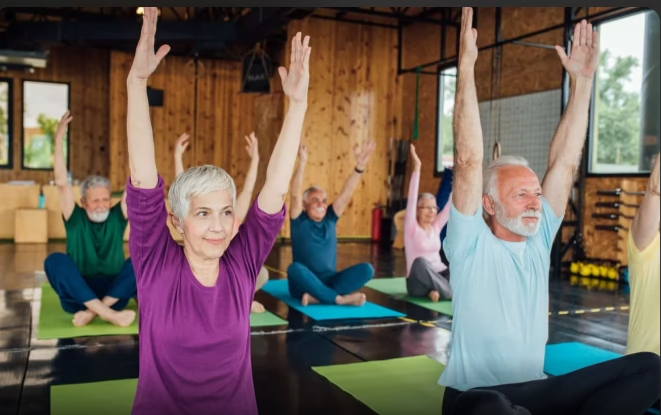
Heart disease remains the leading cause of death in adults over 65 worldwide (WHO). But it is also highly preventable — with up to 80% of premature cardiovascular deaths attributable to modifiable lifestyle factors (source: American Heart Association).
What Is Zone 2 Training and Why Does It Matter for Longevity?
Zone 2 cardio — exercising at approximately 60–70% of your maximum heart rate, at a pace where you can hold a conversation but breathing is elevated — is the most metabolically beneficial form of cardiovascular exercise for long-term health.
Why Zone 2 specifically:
- Primarily burns fat for fuel (not glycogen), improving metabolic flexibility
- Builds mitochondrial density — more mitochondria per muscle cell = more energy, less fatigue
- Improves VO2 max — the single strongest predictor of longevity in multiple studies
- Reduces cardiovascular inflammation more effectively than high-intensity training alone
- Is joint-friendly and sustainable for aging adults
A 2018 study in JAMA Network Open found that every 1 MET increase in cardiorespiratory fitness (measured by VO2 max) was associated with a 13% reduction in all-cause mortality — a dose-response relationship with no ceiling.
Zone 2 Target Heart Rate Formula:
- Maximum Heart Rate (estimated): 220 − your age
- Zone 2 Target: 60–70% of that number
- Example (65-year-old): 220 − 65 = 155; Zone 2 = 93–108 bpm
Best Zone 2 activities for older adults:
- Brisk walking (most accessible; zero equipment)
- Cycling (outdoor or stationary — low joint impact)
- Swimming (excellent for arthritic joints)
- Rowing (full-body, seated — low joint stress)
- Elliptical training
Recommended dose: 150–180 minutes of Zone 2 per week, ideally in 30–45 minute sessions.
7. Balance, Flexibility, and Fall Prevention {#balance-flexibility}
Falls are the leading cause of injury-related death in adults over 65 — accounting for over 36,000 deaths per year in the US alone (source: CDC Fall Prevention). Yet falls are not an inevitable consequence of aging. They are largely preventable.
The 3 Physical Qualities That Prevent Falls
1. Balance — the ability to control your body’s center of mass 2. Lower body strength — particularly in the glutes, quads, and calves 3. Reaction time — the ability to catch yourself when you begin to fall
All three decline with age — but all three respond to training.
Evidence-Based Balance and Fall Prevention Exercises
The “Standing on One Leg” Test Research published in the British Journal of Sports Medicine (2022) found that adults who could not balance on one leg for 10 seconds had a nearly 2x higher risk of dying within the next 10 years. This simple test is now considered a meaningful longevity marker.
Practice progression:
- Week 1–2: Hold onto a wall or chair; stand on one leg for 10 seconds each side
- Week 3–4: Reduce support; build to 20 seconds
- Week 5–8: Eyes closed; stand on one leg for 10 seconds (dramatically harder)
- Ongoing: Single-leg stance during daily activities (brushing teeth, waiting for the kettle)
Tai Chi Multiple randomized controlled trials show Tai Chi reduces fall risk by 45–50% in older adults — more effectively than standard balance exercises alone. It improves proprioception (body position awareness), lower body strength, and psychological confidence simultaneously.
Yoga Regular yoga practice improves flexibility, core strength, and balance in older adults, with a 2016 International Journal of Yoga study showing significant improvements in balance and fall prevention after 12 weeks of twice-weekly practice.
Heel-to-Toe Walking (Tandem Walk) Walk in a straight line placing the heel of one foot directly in front of the toes of the other — like walking a tightrope. Do 20 steps forward and 20 steps back. This challenges the balance and vestibular systems directly.
Resource: The CDC’s STEADI (Stopping Elderly Accidents, Deaths & Injuries) program provides free fall prevention resources and a clinical framework for health providers and patients.
8. Preventive Health Screenings by Age: What to Get and When {#preventive-screenings}
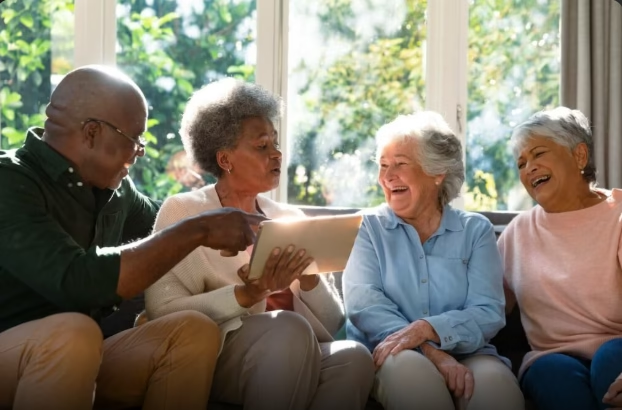
Prevention is always more effective — and less expensive — than treatment. Regular screenings catch disease early when it is most treatable and often reversible.
Essential Preventive Screenings by Age Group
For Adults 40–49:
| Screening | Frequency | Why It Matters |
|---|---|---|
| Blood pressure | Annually (or every 2 years if normal) | Hypertension often has no symptoms until damage is done |
| Cholesterol panel (lipid profile) | Every 5 years (annually if elevated) | Cardiovascular risk assessment |
| Fasting blood glucose / HbA1c | Every 3 years | Pre-diabetes affects 1 in 3 adults over 35 |
| Skin cancer check | Annually if high-risk | Melanoma survival rate is 98% when caught early |
| Eye exam | Every 2 years | Early glaucoma and macular degeneration detection |
| Dental exam | Every 6 months | Oral health linked to cardiovascular and cognitive health |
| Mental health screening | Annually | Depression and anxiety are underdiagnosed in this group |
For Adults 50–64:
Everything above, PLUS:
| Screening | Frequency | Why It Matters |
|---|---|---|
| Colorectal cancer screening | Every 10 years (colonoscopy); annually (stool test) | 3rd most common cancer; highly treatable when caught early |
| Mammogram (women) | Every 1–2 years | Breast cancer risk rises significantly after 50 |
| Bone density scan (DEXA) | Every 2 years (women); discuss with GP for men | Osteoporosis affects 10 million Americans over 50 |
| Lung cancer screening (low-dose CT) | Annually if 50+ with 20-pack-year smoking history | Most effective early detection tool available |
| Hearing test | Every 3 years | Untreated hearing loss is a significant dementia risk factor |
For Adults 65+:
Everything above, PLUS:
| Screening | Frequency | Why It Matters |
|---|---|---|
| Cognitive assessment | Annually | Early MCI detection allows intervention |
| Fall risk assessment | Annually | Identifies risk before an injury occurs |
| Abdominal aortic aneurysm (AAA) ultrasound | Once (men 65–75 who have smoked) | Silent but life-threatening if undetected |
| Shingles vaccine (Shingrix) | Two doses if not already received | Shingles causes severe pain and nerve damage; highly preventable |
| Pneumococcal vaccine | Discuss with physician | Pneumonia is a leading cause of hospitalization in this group |
Resource: The U.S. Preventive Services Task Force (USPSTF) publishes regularly updated, evidence-graded screening recommendations — free and publicly searchable by age and condition.
9. Sleep, Stress, and Social Connection: The Underrated Longevity Trio {#sleep-stress-social}
Sleep: The Body’s Longevity Maintenance Window
Sleep is when your body does the most critical repair and maintenance work — consolidating memories, clearing brain waste, regulating hormones, repairing tissue, and resetting the immune system.
A comprehensive review in Nature Reviews Neuroscience found that consistent short sleep duration (under 6 hours) was associated with increased risk of Alzheimer’s, cardiovascular disease, metabolic syndrome, and all-cause mortality.
Sleep targets for healthy aging:
- Adults 65+: National Sleep Foundation recommends 7–8 hours per night
- Maintain a consistent sleep/wake schedule — circadian regularity is as important as duration
- Treat sleep apnea (affects 1 in 4 adults over 60) — untreated, it significantly accelerates cognitive and cardiovascular aging
Stress: Chronic Stress Ages You at the Cellular Level
Chronic stress elevates cortisol chronically, which:
- Shortens telomeres — accelerating biological aging directly (Nobel Prize–winning research by Dr. Elizabeth Blackburn)
- Drives systemic inflammation — the common pathway of nearly all chronic disease
- Impairs hippocampal neurogenesis — directly damaging memory and learning
Evidence-based stress reduction for older adults:
- Mindfulness-Based Stress Reduction (MBSR): 8-week program with robust evidence for reducing inflammatory markers and cortisol. MBSR resources via UMass Medical School
- Regular physical exercise (reduces cortisol acutely and chronically)
- Nature exposure: 20 minutes in green space measurably reduces cortisol
- Purpose and meaning: Adults with a strong sense of purpose live measurably longer — a finding replicated across the Blue Zones and in the MIDUS study (University of Wisconsin)
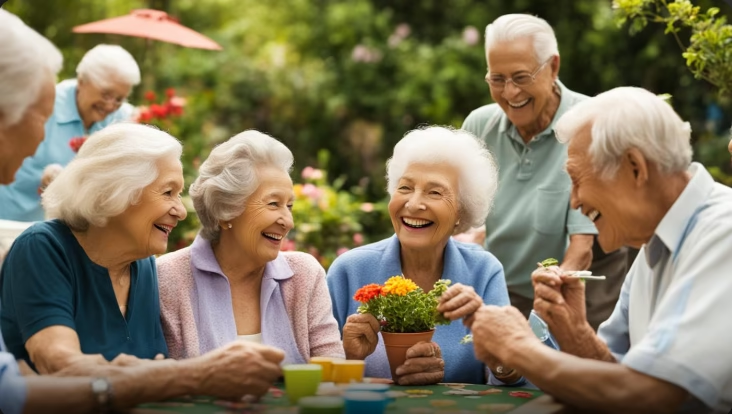
Social Connection: The Most Overlooked Longevity Factor
Dr. Robert Waldinger, director of the Harvard Study of Adult Development — the longest-running study of adult life (80+ years) — summarized its findings clearly:
“The people who were the most satisfied in their relationships at age 50 were the healthiest at age 80.”
A meta-analysis of 148 studies (Holt-Lunstad et al., PLOS Medicine) found that strong social relationships increased survival odds by 50% — an effect comparable to quitting smoking and exceeding the effects of regular exercise or avoiding obesity.
Practical social connection strategies for aging adults:
- Join a community class (fitness, art, language) — combines social connection with cognitive challenge
- Volunteer regularly — associated with reduced depression and extended longevity in multiple studies
- Maintain intergenerational relationships — mixing age groups is independently protective
- Use technology intentionally for connection (video calls with family), not passively (scrolling)
10. Your 12-Week Longevity Starter Plan {#12-week-plan}
This plan integrates all key domains — strength, cardiovascular health, brain health, nutrition, and preventive care — into a realistic weekly structure.
Weekly Schedule Template
| Day | Activity | Duration | Focus Area |
|---|---|---|---|
| Monday | Full-body strength training | 45–60 min | Muscle/bone/metabolism |
| Tuesday | Zone 2 walk or cycle | 35–45 min | Cardiovascular/mitochondria |
| Wednesday | Yoga or Tai Chi | 30–45 min | Balance/flexibility/stress |
| Thursday | Full-body strength training | 45–60 min | Muscle/bone/metabolism |
| Friday | Zone 2 walk or swim | 35–45 min | Cardiovascular/brain |
| Saturday | Social activity + light walk | 30–60 min | Social connection/movement |
| Sunday | Rest + mindfulness/journaling | 20–30 min | Recovery/stress/purpose |
12-Week Milestones
Weeks 1–4 (Foundation):
- Establish consistent sleep schedule
- Begin strength training 2x/week (bodyweight or light resistance)
- Walk 30 minutes daily
- Book all overdue preventive screenings
- Begin food diary; hit protein target
Weeks 5–8 (Build):
- Progress to 3x/week strength training
- Add Zone 2 cardio sessions
- Introduce balance training (single-leg stands daily)
- Begin one new cognitive activity (language app, instrument, class)
- Audit social connections; schedule weekly meaningful interaction
Weeks 9–12 (Optimize):
- Progressive overload in strength sessions
- Consistent 150+ minutes Zone 2 per week
- 10-second one-leg balance — eyes open, then eyes closed
- Review screening results with physician
- Evaluate diet quality; introduce 2 MIND diet foods not currently eating
11. People Also Ask (FAQs) {#faqs}
What is the single most important exercise for longevity?
If forced to choose one, the research most consistently points to resistance training (strength training), because it addresses the most life-limiting aspects of aging simultaneously: muscle loss (sarcopenia), bone density (osteoporosis), fall prevention, metabolic health, and cognitive function. Aerobic exercise is a very close second — and ideally, both are combined.
At what age should you start worrying about longevity?
The best time to start is your 30s, when muscle loss begins and cardiovascular risk factors first emerge. The second-best time is today, regardless of age. Strength training studies consistently show significant benefits even in adults in their 80s and 90s — it is never too late to build muscle, improve balance, or protect cognitive function.
How much protein do older adults actually need?
The general RDA of 0.8g/kg of bodyweight is widely considered too low for adults over 60 by leading protein researchers. Current evidence supports 1.2–1.6g/kg/day for maintaining muscle mass, and up to 2.0g/kg/day when in a caloric deficit or actively building muscle. For a 70kg (155 lb) person, that’s 84–112g of protein daily at the conservative end.
Can you reverse cognitive decline with lifestyle changes?
Mild cognitive impairment (MCI) — the stage before dementia — can be meaningfully slowed, and in some cases partially reversed, with aggressive lifestyle intervention. The FINGER trial (Finland, Lancet, 2015) showed that a multidomain intervention (exercise, nutrition, cognitive training, vascular risk management) significantly improved cognitive scores in at-risk older adults over 2 years. Full Alzheimer’s dementia is not currently reversible, though research on this is active.
What are the best supplements for longevity?
The most evidence-supported supplements for healthy aging include: Vitamin D3 + K2 (especially if sun exposure is limited), Omega-3 fatty acids (EPA/DHA) from fish oil or algae, Magnesium glycinate (widely deficient; supports sleep, muscle, and cardiovascular health), and Creatine monohydrate (supports muscle strength and shows emerging cognitive benefits in older adults). Always consult your physician before starting supplements, as individual needs vary.
How does social isolation affect aging?
Social isolation significantly accelerates cognitive decline, increases inflammation, raises dementia risk, and is independently associated with higher all-cause mortality. The Lancet 2024 dementia commission identifies it as one of 14 modifiable dementia risk factors. The Harvard Study of Adult Development found relationship quality at 50 to be the strongest predictor of physical health at 80 — stronger than cholesterol or genetics.
What preventive screenings are most important after 60?
The highest-priority screenings after 60 are: blood pressure (annually), cholesterol and glucose (annually if any abnormality), colorectal cancer screening, bone density scan, cognitive assessment, hearing test, vision exam, and fall risk assessment. Women should continue mammograms; men should discuss prostate cancer screening with their physician. Review the USPSTF recommendations for full, evidence-graded guidance.
12. Content Cluster: Related Articles {#content-cluster}
- PCOS vs Endometriosis: Symptoms, Causes, Treatment & Natural Relief Guide (2026)
- Weight Loss and Sustainable Fitness in 2026: GLP-1 Medications, Ozempic Alternatives, and Long-Term Success
- How to Improve Sleep Quality: The Ultimate Evidence-Based Guide (2026)
- How to Manage Stress and Protect Your Mental Health: A Complete Evidence-Based Guide (2026)
Key Takeaways
- Healthspan, not just lifespan, is the goal — compression of morbidity means living vigorously until the end, not extending decline.
- Muscle is your most valuable longevity asset. Strength training 2–3x per week reduces all-cause mortality by 23% and is the most impactful single intervention for aging adults.
- Nearly half of all dementia is preventable through lifestyle — exercise, sleep, social engagement, cognitive challenge, and the MIND diet are your most powerful tools.
- Zone 2 cardio builds the mitochondrial engine that drives energy, metabolic health, and cardiovascular resilience. 150 minutes per week is the minimum effective dose.
- Balance training prevents falls — the leading cause of injury death in adults over 65. Practice standing on one leg every day.
- Preventive screenings save lives — most diseases caught early are treatable; caught late, they are not. Stay on schedule.
- Sleep, stress management, and social connection are not soft extras — they are biological necessities for a long, healthy life.
- Start today. The research is unambiguous: it is never too late to begin. Every week of consistent effort adds to your healthspan.
Last updated: June 2026 | Sources: CDC, NIH, JAMA, The Lancet, NEJM, Nature Aging, British Journal of Sports Medicine, American Heart Association, Harvard T.H. Chan School of Public Health, American College of Sports Medicine, USPSTF, Rush University, Blue Zones Research
This article is for informational and educational purposes only and does not constitute medical advice. Always consult a qualified healthcare professional before beginning a new exercise program or health intervention.