
Celebrity Plastic Surgery Trends 2026: Subtle Refinements to the “Uncanny Valley”
Kumar G is the founder of Future Smart Living, sharing expert-backed content on health, wellness, technology, personal finance, and smart living. His goal is to provide practical, trustworthy guides that help readers live healthier, smarter, and more informed lives.
In the age of high-definition cameras and constant social media scrutiny, public figures face relentless pressure to maintain a youthful appearance. Celebrity plastic surgery speculation has grown from tabloid whispers into a genuine cultural conversation — one that shapes global beauty standards whether or not any individual claim is ever confirmed.
A note before we start: Almost none of the claims below have been confirmed by the individuals named. Appearance changes over time can be explained by many things beyond surgery — makeup, professional lighting, weight fluctuation, skincare routines, aging, or simply a new haircut. What follows reflects patterns that cosmetic surgeons and entertainment commentators have publicly discussed, not confirmed medical history. We’ve used hedged language (“has been speculated,” “surgeons have suggested”) throughout for exactly this reason.
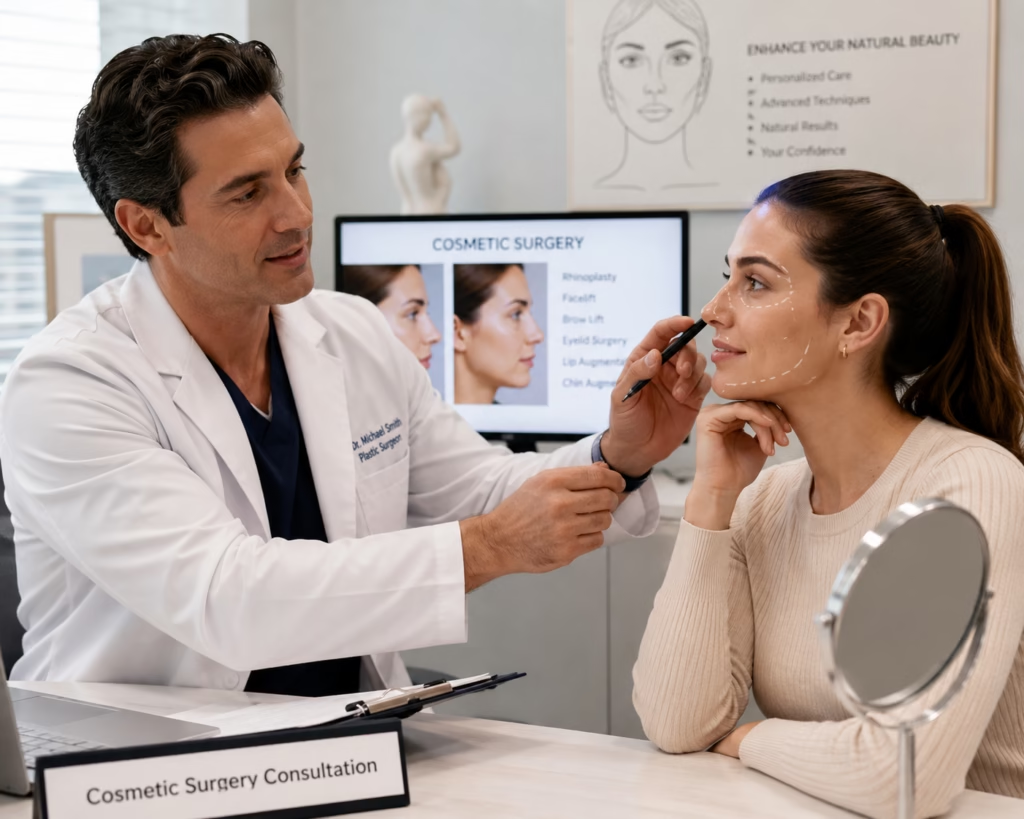
Table of Contents
- Subtle Enhancements: When Work Looks Natural
- The “Uncanny Valley”: When Speculation Points to Overcorrection
- 2026 Trends Surgeons Are Watching Closely
- A Global Concern: Pressure on Young Performers
- What Procedures Actually Cost and Involve
- Expert Advice Before Considering Surgery
- FAQ
Subtle Enhancements: When Work Looks Natural {#subtle-enhancements}
Not every plastic surgery result is dramatic — cosmetic surgeons often point out that the best work is the kind nobody notices. Some public figures are frequently cited by surgeons and commentators as examples of subtle refinement rather than obvious alteration, though again, none of the following has been confirmed by the individuals themselves:
- Some actors praised for “aging naturally” are, according to surgeon commentary, more likely showing the effects of genetics, skincare, and lifestyle than any procedure — a reminder that natural aging varies enormously between people.
- Changes to a hairline or a more “open” eye appearance have led some surgeons to speculate about possible hair restoration or a conservative eyelid procedure (blepharoplasty) in certain public figures, though such observations are inherently uncertain from photos alone.
- Visible improvements in hair density are sometimes attributed by commentators to FUT (Follicular Unit Transplantation), a well-documented hair restoration technique — again, speculative unless the person has confirmed it publicly.
- Subtle frame-appropriate changes some entertainment commentators have flagged as possible early augmentation are just as often the result of normal body changes through a person’s 20s and 30s.
The “Uncanny Valley”: When Speculation Points to Overcorrection {#uncanny-valley}
The term “uncanny valley” describes a face that reads as subtly “off” because its proportions or movement patterns diverge from what we naturally expect — something that can happen when multiple procedures are layered over many years.
Cosmetic surgeons have used certain public figures as teaching examples for this effect in the media:
- Commentary around cumulative, long-term cosmetic work (multiple facelifts, brow lifts, and dermal fillers over decades) has led some surgeons to describe a look nicknamed “pillow face” — where repeated volumizing fillers create an overly rounded cheek appearance. This term describes a look, not a confirmed procedure history for any specific person.
- Rhinoplasty (nose surgery) is medically documented to become progressively riskier with each repeat procedure, since scar tissue accumulates and can eventually compromise the nose’s structural support — a well-established surgical risk regardless of which public figures may or may not have experienced it.
- Instances of undergoing many procedures within a very short timeframe have been publicly discussed by some entertainers themselves as instructive cautionary stories, since concentrated surgical stress on the body inherently raises the risk of complications, including cardiac strain.
2026 Trends Surgeons Are Watching Closely {#trends}
Current aesthetic trends are shifting toward specific “camera-ready” features, though board-certified surgeons increasingly caution about the tradeoffs involved:
- Buccal Fat Removal — This procedure removes fat pads from the inner cheeks to create a more contoured, “snatched” look. Surgeons caution that because the face naturally loses volume with age, removing buccal fat now can accelerate a hollowed appearance later in life.
- The Upper Lip Lift — A procedure that shortens the distance between the nose and upper lip. Surgeons note it leaves a permanent scar along the base of the nose and is frequently unnecessary for younger patients whose anatomy hasn’t yet changed with age.
- The “Fox Eye” Lift — A non-surgical technique using barbed sutures to pull the outer eye into a slanted position. Results typically last only 6-12 months, and surgeons note the effect can look unnatural if overdone.
A Global Concern: Pressure on Young Performers {#global-perspective}
This pressure isn’t confined to Hollywood. In several film industries outside the U.S., including parts of the Indian entertainment industry, there are growing public concerns about performers as young as their mid-to-late teens pursuing cosmetic procedures before beginning their careers. Mental health professionals have raised concerns that normalizing cosmetic intervention at such a young age may contribute to body image struggles, including body dysmorphic disorder, particularly as young people compare themselves to heavily filtered social media imagery.
This is a genuine public health concern worth taking seriously — regardless of which individual cases are true, the broader trend of pressure on minors to alter their appearance for career reasons is well-documented by mental health researchers and warrants caution from parents, industry figures, and platforms alike.
What Procedures Actually Cost and Involve {#cost-and-recovery}
Rather than attribute specific dollar figures to specific individuals — numbers that circulate in entertainment media are typically unverified estimates, not disclosed medical costs — it’s more useful to look at real-world procedure costs and expectations:
| Procedure | Typical U.S. Cost Range* | Recovery Time* |
|---|---|---|
| Rhinoplasty | $5,000–$15,000+ | 2–4 weeks (visible swelling can persist for months) |
| Facelift | $7,000–$25,000+ | 2–4 weeks |
| Blepharoplasty (eyelid surgery) | $3,000–$8,000 | 1–2 weeks |
| Hair Transplant (FUT/FUE) | $4,000–$20,000+ | Several months for full results |
| Buccal Fat Removal | $3,000–$7,000 | 1–2 weeks |
| Dermal Fillers | $600–$2,000 per session | Minimal downtime, effects last 6–18 months |
*Costs and recovery times vary significantly by surgeon, geography, and technique. Figures are general U.S. estimates and not specific to any individual mentioned in this article.
Importantly, procedures like facelifts and breast implants are rarely a one-time purchase — many require maintenance or revision surgery roughly every 10-15 years.
Expert Advice Before Considering Surgery {#expert-advice}
Board-certified cosmetic surgeons who speak publicly on these topics tend to emphasize a few consistent points:
- Surgery is generally framed as a later-stage option, not a first response to appearance concerns — most reputable surgeons recommend starting with non-invasive options and addressing underlying skin health first.
- Certain visual cues are commonly cited in surgeon commentary as indicators of past facelift work — for example, an unusually crisp jawline with no natural jowling in someone over 60 — though surgeons themselves acknowledge these are informed guesses, not diagnoses.
- A healthy foundation matters more than any single procedure: consistent use of evidence-based skincare ingredients (retinoids, vitamin C), stable nutrition, adequate sleep, and — importantly — mental health support to address any underlying body image concerns that may be driving the desire for surgery in the first place.
If you or someone you know is considering cosmetic surgery, a consultation with a board-certified plastic surgeon (verified through your country’s medical board) is the only reliable way to get individualized advice — not celebrity speculation.
Frequently Asked Questions {#faq}
Can you tell for certain if someone has had plastic surgery just by looking at photos? No. Appearance alone cannot reliably confirm whether someone has undergone a cosmetic procedure. Lighting, makeup, camera angles, weight changes, skincare, and natural aging can all produce visual changes that closely resemble surgical results.
Is celebrity plastic surgery speculation harmful? It can be, particularly when presented as confirmed fact rather than observation, and especially regarding young public figures. Responsible coverage should clearly distinguish “experts have speculated” from “this person has confirmed.”
What is the “uncanny valley” effect in cosmetic surgery? It describes a face that appears subtly unnatural because proportions or movement patterns fall outside typical human ranges — often the cumulative result of multiple procedures performed over many years rather than any single treatment.
Are hair transplants considered plastic surgery? Yes. Procedures like FUT and FUE are surgical hair restoration techniques performed by dermatologic or plastic surgeons, and are among the more commonly disclosed cosmetic procedures among public figures.
What should I do if I’m considering cosmetic surgery because of insecurity, not health reasons? Consider speaking with a licensed mental health professional first. Reputable surgeons routinely screen for body dysmorphic disorder before proceeding, since surgery does not resolve underlying body image concerns for everyone.
External Resources & Expert Sources
- Dr. Anthony Youn — Holistic Plastic Surgery
- Dr. Gary Linkov — City Facial Plastics
- Dr. Amir Karam — Vertical Restore
- American Society of Plastic Surgeons — Procedure Information
- American Academy of Dermatology — Cosmetic Procedures
Related Articles
- How to Reduce Inflammation Through Diet: The Evidence-Based Guide
- How Your Gut Microbiome Controls Sleep: The Science Behind Better Rest and Better Health
- Natural Remedies for Better Sleep and Insomnia Relief
- How to Build a No-Equipment Home Workout Routine for Busy Professionals
- Lymphatic Drainage: The Complete Guide to Boosting Your Immune System Naturally
- Vitamin B12 Deficiency: Symptoms, Causes & Treatment
Disclaimer: This article discusses publicly circulated speculation and commentary from cosmetic surgery professionals. It does not confirm, diagnose, or assert that any named individual has undergone any specific medical or cosmetic procedure. Appearance alone cannot determine whether someone has had cosmetic work done, and readers should not treat speculation as medical fact. This article is for general informational purposes only and is not medical advice.