
Kumar G is the founder of Future Smart Living, sharing expert-backed content on health, wellness, technology, personal finance, and smart living. His goal is to provide practical, trustworthy guides that help readers live healthier, smarter, and more informed lives.
The Complete Guide to Eye Color Genetics, Rare Eye Colors & Health Facts
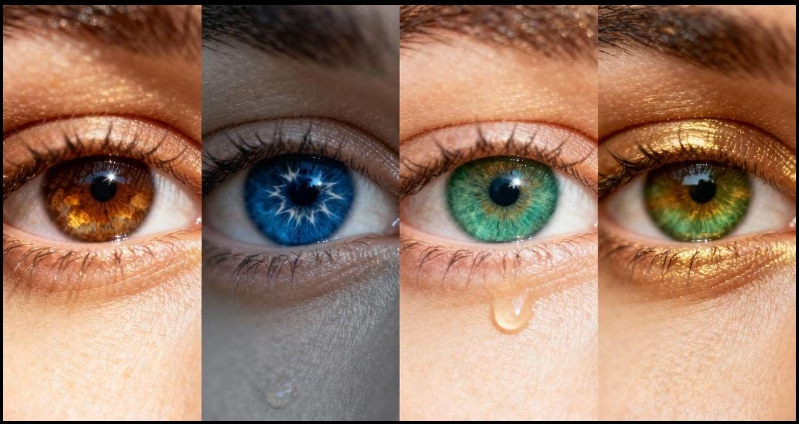
Have you ever wondered why some people have bright blue eyes while others have deep brown, green, hazel, or even two different-colored eyes?
Eye color is much more than appearance. It reflects thousands of years of human evolution, genetics, and the amount of melanin present in your iris. Scientists now know that eye color is influenced by multiple genes—not just one—and can even change slightly throughout life.
In this comprehensive guide, you’ll learn:
- How eye color is inherited
- Which eye color is the rarest
- Why blue eyes aren’t actually blue
- Can eye color change naturally?
- Medical conditions that affect eye color
- The truth about cosmetic eye color surgery
- Frequently asked questions answered by science
Table of Contents
- What Determines Eye Color?
- Why Blue Eyes Are Not Actually Blue
- Eye Color Genetics Explained
- Eye Color and Human Evolution
- The Rarest Eye Colors in the World
- Can Eye Color Change Naturally?
- Medical Conditions That Affect Eye Color
- Can You Change Eye Color Permanently?
- Advantages and Disadvantages of Different Eye Colors
- Frequently Asked Questions
What Determines Eye Color?
Change block type or style
Move Paragraph block from position 14 up to position 13
Move Paragraph block from position 14 down to position 15
Change alignment
Change text alignment
Displays more block tools
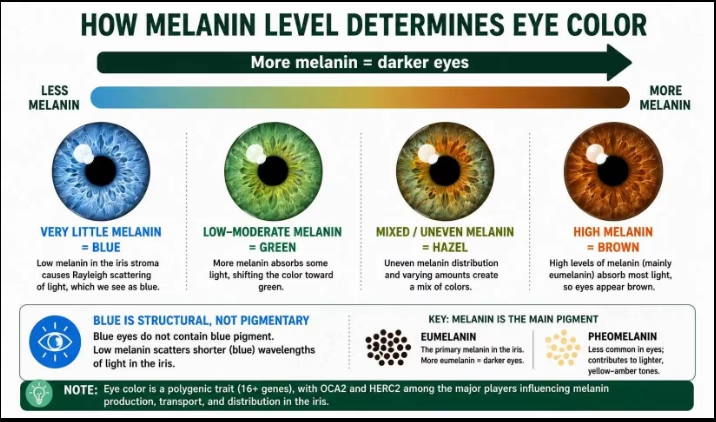
Your eye color depends almost entirely on the amount and distribution of melanin inside the iris.
Melanin is the same natural pigment responsible for:
- Skin color
- Hair color
- Eye color
The more melanin present inside the iris, the darker the eye appears.
Brown Eyes
Brown eyes contain the highest concentration of melanin.
Benefits include:
- Better UV protection
- Lower light sensitivity
- Reduced risk of some sun-related eye damage
Brown is also the world’s most common eye color.
Blue Eyes
Contrary to popular belief…
There is no blue pigment inside blue eyes.
Blue eyes appear blue because of the way light scatters inside the iris, a phenomenon known as Rayleigh scattering (similar to why the sky appears blue).
People with blue eyes simply have very little melanin in the front layer of the iris.
Green Eyes
Green eyes are among the rarest eye colors.
They result from:
- Low melanin
- Yellow pigment (lipochrome)
- Blue light scattering
This combination produces the distinctive emerald appearance.
Hazel Eyes
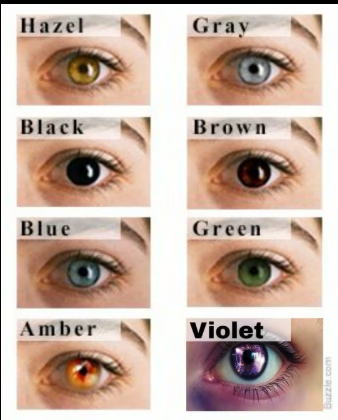
Hazel eyes contain varying amounts of brown, green, and gold pigments.
Depending on lighting conditions, they may appear:
- Green
- Brown
- Amber
- Gold
Eye Color Genetics Explained
Scientists once believed eye color followed a simple dominant-recessive inheritance pattern.
Today we know eye color is polygenic, meaning multiple genes work together.
The most important genes include:
- OCA2
- HERC2
- SLC24A4
- TYR
- IRF4
Among these, the interaction between HERC2 and OCA2 has the greatest influence.
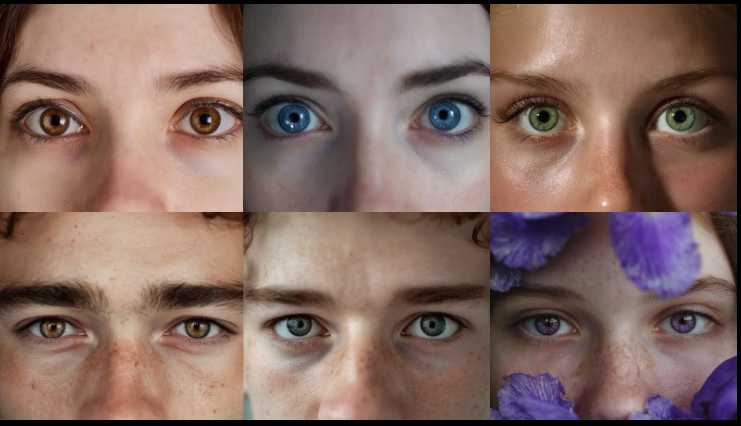
This explains why two brown-eyed parents can occasionally have a blue-eyed child if both carry recessive gene variants.
Eye Color and Human Evolution
Researchers believe all early humans originally had brown eyes.
Brown eyes offered protection against strong ultraviolet radiation in equatorial regions.
Between 6,000 and 10,000 years ago, a genetic mutation near the Black Sea region affected melanin production, leading to lighter eye colors.
As humans migrated north into Europe:
- Less UV exposure reduced the need for heavy pigmentation.
- Blue and green eyes became more common in northern populations.
Today, eye color can provide clues about ancestry, although it cannot determine ethnicity by itself.
The World’s Rarest Eye Colors
| Eye Color | Estimated Frequency |
|---|---|
| Brown | 70–80% |
| Blue | 8–10% |
| Hazel | 5% |
| Amber | <5% |
| Green | ~2% |
| Gray | 1–3% |
| Heterochromia | <1% |
| Red/Violet (usually due to albinism) | Extremely rare |
Green Eyes
Only about 2% of people worldwide naturally have green eyes.
Gray Eyes
Gray eyes contain very little pigment and a high density of collagen fibers that scatter light differently from blue eyes.
Amber Eyes
Amber eyes have a golden or copper appearance because of increased lipochrome pigment.
Heterochromia
Heterochromia occurs when each eye has a different color—or when one iris contains multiple colors.
Types include:
- Complete heterochromia
- Sectoral heterochromia
- Central heterochromia
Most cases are harmless, although sudden changes should be evaluated by an eye specialist.
Can Eye Color Change Naturally?
Yes—but only under certain circumstances.
During Infancy
Many babies are born with:
- Blue eyes
- Gray eyes
Melanin production increases over the first few years of life, causing the eyes to darken.
Aging
Older adults may develop:
- Lighter iris color
- Gray rings around the cornea (arcus senilis)
Lighting
Eye color may appear different depending on:
- Sunlight
- Indoor lighting
- Clothing color
- Pupil size
This is an optical effect—not a true color change.
Medical Conditions
Several conditions can alter iris pigmentation, including:
- Horner syndrome
- Fuchs heterochromic iridocyclitis
- Pigment dispersion syndrome
- Eye injuries
Any sudden eye color change should be examined promptly by an ophthalmologist.
Can You Change Eye Color Permanently?
Some cosmetic procedures claim to permanently change eye color, but they carry significant risks.
Iris Implants
Originally developed for medical reconstruction, cosmetic iris implants have been linked to:
- Glaucoma
- Cataracts
- Corneal damage
- Vision loss
Laser Depigmentation
Laser procedures remove melanin from brown irises to reveal a lighter appearance.
Potential complications include:
- Elevated eye pressure
- Inflammation
- Permanent vision damage
Keratopigmentation
This technique places pigment into the cornea using specialized lasers.
While some patients are satisfied with cosmetic results, long-term safety data remain limited, and risks include infection, glare, and light sensitivity.
Because these procedures can threaten vision, they should only be considered after consultation with a qualified ophthalmologist.
Are Certain Eye Colors Better?
Every eye color has strengths and limitations.
Brown Eyes
Advantages
- Better UV protection
- Lower glare sensitivity
- Lower risk of some UV-related eye conditions
Blue and Green Eyes
Advantages
- Better performance in some low-light situations
- Unique appearance
Challenges
- Greater light sensitivity
- Increased susceptibility to UV damage
- Higher need for UV-protective sunglasses
How to Keep Your Eyes Healthy

Regardless of eye color:
- Wear UV400 sunglasses outdoors.
- Eat leafy greens, carrots, eggs, citrus fruits, and oily fish.
- Avoid smoking.
- Schedule regular comprehensive eye examinations.
- Manage diabetes and blood pressure.
- Use protective eyewear during sports or hazardous work.
Frequently Asked Questions
Can two brown-eyed parents have a blue-eyed child?
Yes. If both parents carry certain recessive gene variants, a blue-eyed child is possible.
Why do babies’ eyes change color?
Melanin production increases during infancy, gradually changing the iris color.
What is the rarest natural eye color?
Green is the rarest naturally occurring eye color among healthy individuals, while red or violet eyes are extremely rare and usually associated with albinism.
Is heterochromia dangerous?
Most cases are harmless and congenital. However, sudden onset in adulthood should be evaluated by an eye doctor.
Can diet change eye color?
No. A healthy diet supports eye health but does not change your natural iris color.
Final Thoughts
Eye color is the result of a fascinating combination of genetics, light physics, and human evolution. From the melanin-rich brown eyes that dominate the global population to the exceptionally rare green and gray eyes, every iris tells part of a person’s biological story. While cosmetic procedures promise dramatic changes, protecting your natural vision should always take priority.
Authoritative External Links:
- National Library of Medicine (MedlinePlus): https://medlineplus.gov/genetics/understanding/traits/eyecolor/
- American Academy of Ophthalmology: https://www.aao.org/eye-health
- National Eye Institute: https://www.nei.nih.gov
- Nature (Eye Color Genetics Research): https://www.nature.com/articles/jhg2010126
- Cleveland Clinic – Heterochromia: https://health.clevelandclinic.org/heterochromia-eye-colors
Recommended Internal Links
- Foods and Remedies That Naturally Boost Immunity: The Evidence-Based Guide
- 10 Best Massagers 2026: Leg, Back, Foot & Massage Guns
- Vitamin D Deficiency: Symptoms, Causes & Recovery
- Top Dermatologist-Approved Skin Care Home Remedies for Acne, Eczema, and Dry Skin
- Home Remedies for Cold and Flu Symptoms: The Evidence-Based Guide
- High-Fiber Foods: The Ultimate Guide to Better Gut Health, Digestion & Weight Loss
- Skin Allergy: Symptoms, Causes & Best Treatment Guide (2026)
- Heart Health Tips: 15 Science-Backed Ways to Prevent Heart Disease Naturally (2026 Guide)
Disclaimer: This article is for general educational purposes only and is not a substitute for professional medical advice, diagnosis, or treatment. If you suspect a serious allergic reaction or anaphylaxis, seek emergency medical care immediately.